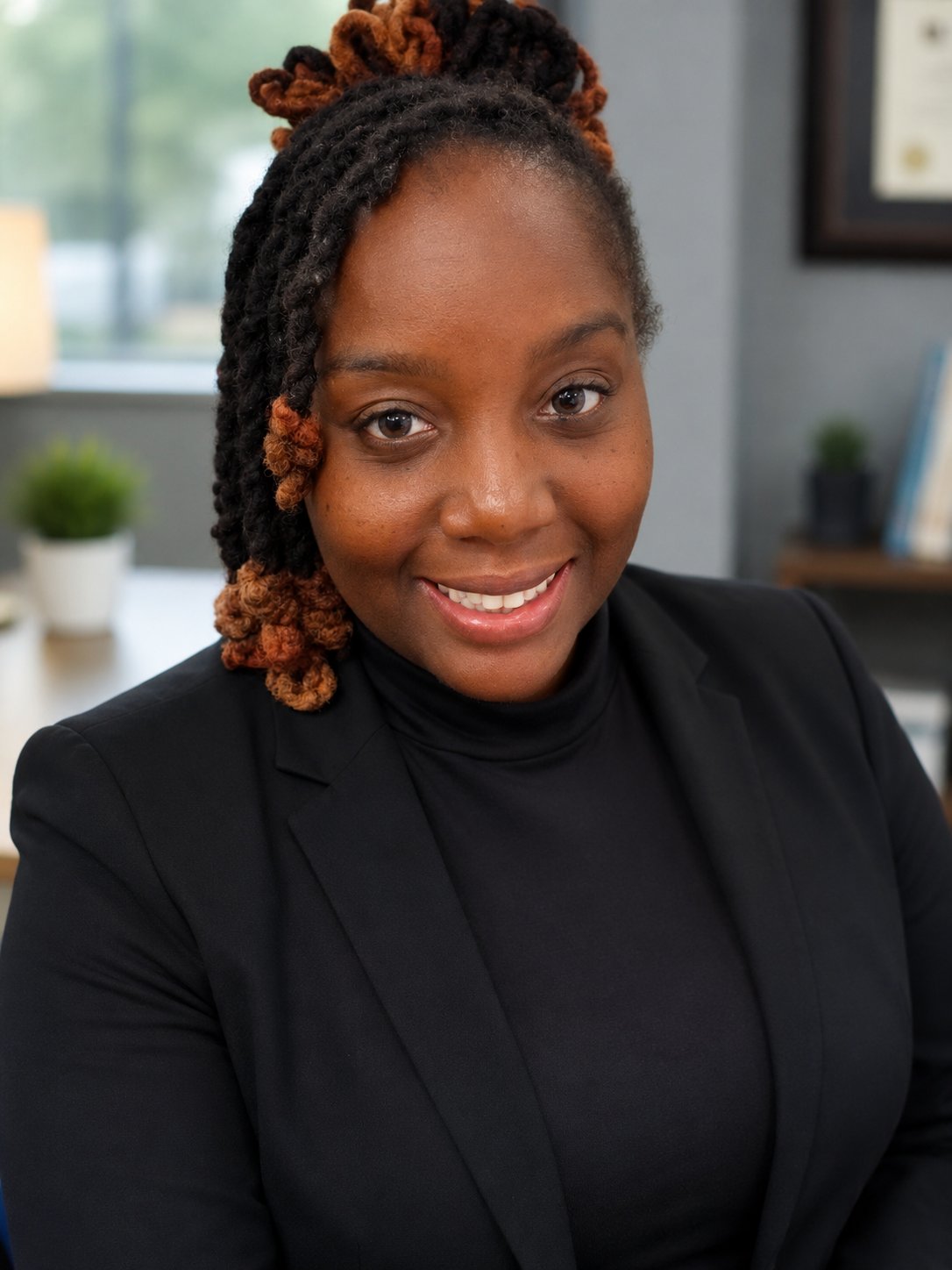
In Partnership with Black Bird Smart Innovations
At the intersection of technology, healthcare, public safety, and purpose, Tyneadrian Fleming, MS, MPA, is building a new model of connected care. As the founder and CEO of Black Bird Smart Innovations, the award-winning inventor is developing wearable safety technology designed to improve emergency response, securely communicate critical medical information, and better protect vulnerable populations. In this condensed CEO Chatter LIVE conversation, she shares the experiences that inspired Black Bird, explains the company’s four-device ecosystem, and discusses what it means to create safety without surveillance as a Black woman entering a multibillion-dollar industry.
The Experience That Sparked Black Bird
Fancy: Before Black Bird Smart Innovations became a company, what experience or problem inspired you to create technology for vulnerable populations?
Tyneadrian: I operate a home care agency in New York and have worked closely with people living with traumatic brain injuries, children with autism, and individuals with limited verbal or cognitive abilities. I have seen how quickly a crisis can develop when someone becomes overstimulated, wanders away, or cannot identify themselves. In direct-care settings, staff sometimes had to run after individuals who eloped because time was critical and they might not know how to return home. I also saw families relying on handwritten notes or social media when a loved one went missing, even though those methods could not guarantee that first responders would receive the right information at the right time.
One experience stayed with me. A client with a traumatic brain injury and limited verbal skills went into a neighborhood store without money. He was not trying to steal, but a new employee did not know him and called 911. Because he could not explain who he was or what condition he had, he was handled roughly. His wife had tried giving neighbors a paper with his information, but that paper was not there when the emergency happened. I began asking how technology could connect the individual, the family, the community, and first responders in real time. That question became Black Bird.
Building a Smarter Safety Ecosystem
Fancy: For someone learning about the company for the first time, what is Black Bird Smart Innovations, and how does the wearable safety ecosystem work?
Tyneadrian: Black Bird Smart Innovations is a smart-technology company with four wearable solutions. I knew that simply creating another GPS locator would not be enough because locating someone does not answer the most important questions: Who are they? What medical condition do they have? Who should be contacted? How should they be cared for? Our technology connects geolocation and wellness features with a secure profile that can provide authorized users with critical information during an emergency.
Our smartwatch can monitor wellness information such as heart rate, sleep patterns, and other health indicators while also supporting geolocation alerts. A caregiver can create safety zones around familiar locations, such as home, church, the post office, or a senior center. If the wearer leaves that area unexpectedly, members of the person’s protective community can receive an alert. If the person is found, the public can see only the information the family has chosen to share, while authorized first responders can use protected access codes to view more detailed care instructions.
We also created the Black Bird Bold, which can be worn as both a smartwatch and a pendant. It functions as a phone, so the wearer can call, text, listen to music, or contact a trusted person without carrying a separate device. For people who already use an Apple Watch or another smartwatch, we developed a medical ID sleeve with a secure QR code that slides onto the band. Then we created a smart button for children with autism or others who may not tolerate a watch or pendant. It can be sewn into clothing, placed inside a backpack, or attached to a comfort item. The goal is not just to track someone. It is to help the person receive the right care once they are found.
Protecting People Without Invading Privacy
Fancy: You often describe Black Bird as “safety without surveillance.” What does that phrase mean, and how do you protect both safety and privacy?
Tyneadrian: It means using technology to protect people during a crisis rather than constantly watching or controlling them. The individual and their trusted circle decide what information is public, what is available to caregivers, and what is reserved for authorized professionals. Our mobile application was designed with healthcare privacy and regulatory requirements in mind, and we have worked to position the devices for Medicaid and managed-care reimbursement. We are also pursuing additional regulatory approvals as we strengthen remote patient monitoring.
Person-centered care is the foundation. When someone is unconscious, nonverbal, experiencing a seizure, or unable to remember medication, strangers should not have to guess how to help. A rideshare driver, school employee, police officer, EMT, or emergency-room provider may all become part of the response. The technology is meant to carry accurate information from one person to the next so the wearer can be treated according to their specific needs and avoid unnecessary confusion, retraumatization, or delays.
Entering the Industry With Purpose and Preparation
Fancy: Black Bird has received industry recognition and national media attention. What makes you most proud as the company grows?
Tyneadrian: Every opportunity to tell the story matters because awareness can save lives. I spent years working behind the scenes in policy, behavioral health, home care, and direct service. I did not originally see myself as the person doing interviews or speaking publicly, but once Black Bird entered the execution stage, I understood that I had to explain what we were building and why communities need it. Parents, caregivers, and professionals continue to give me feedback, and I use that information to improve the product rather than creating technology that looks impressive but sits unused.
I am also proud to be a patent-approved Black woman inventor preparing to disrupt an industry where a major competitor is worth billions of dollars. That requires more than a good idea. It requires confidence, research, regulatory preparation, intellectual-property protection, and a team that understands the mission. I want Black Bird to be effective, cost-conscious, and accessible to the people who need it most.
Fancy: What challenges have you faced building a healthcare-technology company as a Black woman inventor?
Tyneadrian: One challenge is being underestimated. I once presented Black Bird to a physician who initially said he was unimpressed. I had intentionally shown only part of the technology because my instincts told me to protect the idea. Once he understood there were deeper layers to the product and application, he wanted more information, but he refused to sign a nondisclosure agreement. That experience confirmed that I had to trust myself and protect what I had built.
I studied competitors, read customer complaints as data, added multilingual support, strengthened fall detection, secured patents, and completed as much groundwork as possible before entering the market. There were lonely nights when I had to keep believing I could do it. Now I understand that I cannot enter this industry timidly. I have to show up prepared, knowledgeable, protected, and confident in the value of the solution.
Expanding Connected Care Into New Spaces
Fancy: What is next for Black Bird Smart Innovations, and what impact do you hope the company will have?
Tyneadrian: We are exploring several areas where vulnerable people are often overlooked. One is correctional healthcare. I previously worked as a correctional officer, so I understand how staffing shortages, trauma, chronic illness, and communication gaps can place medically fragile individuals at risk. A Black Bird pilot could support wellness monitoring, earlier intervention, transparency, and greater accountability while giving families a clearer way to advocate for loved ones.
We are also pursuing partnerships in travel and hospitality. Families caring for children with autism, seniors, solo travelers, and people with medical conditions should be able to travel with greater confidence. Whether someone is at home, in a school, at an airport, in a resort, or in a public emergency, the vision is the same: create a connected protective community around that person and make critical care information available when it matters most.
Confident, Faithful, and Building the Future
Fancy: What’s your SwagHer? How do you show up in the world?
Tyneadrian: Confident and faithful. Faith requires me to lean on what I cannot always see, and confidence allows me to believe that what I said I would build can become real. I am vulnerable enough to trust the journey and confident enough to keep moving forward.
Black Bird Smart Innovations is guided by the trademarked message, “Saving lives one wrist at a time.” Learn more at https://blackbirdtech.app and follow @blackbird_smart_tech and @blackbird_smart_innovations.
Watch the live interview.