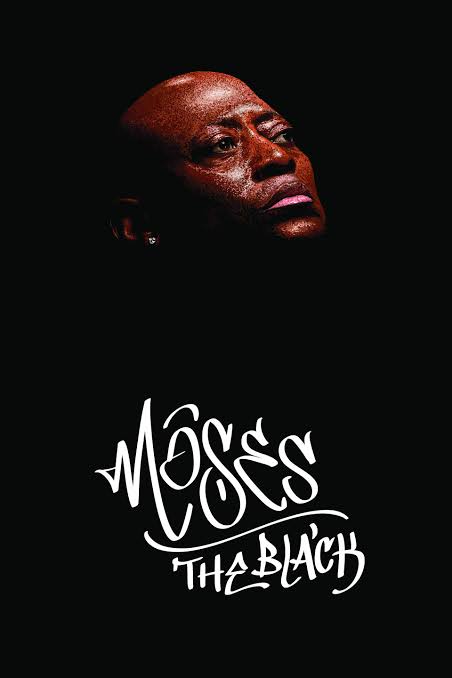
There are films you watch for entertainment, and then there are films that ask something of you: patience, reflection, and a preparedness to sit with discomfort. “Moses the Black” falls squarely into the latter category.
Set in Chicago and released on January 30, 2026, the film follows Malik, a feared gang leader recently released from prison, who returns home amid grief, unfinished business, and spiritual unrest. Haunted by the murder of his closest friend, Malik is pulled back into a domain of rival gangs, a corrupt undercover detective, and a past that refuses to loosen its grip. What unfolds over the film’s one hour and fifty minutes is not a polished redemption arc, but something deeply heavier and more human.
A Story Rooted in Intention, Not Perfection
Within the first twenty minutes, it becomes clear that “Moses the Black” is not a traditional faith-based film wrapped in clean edges or easy answers. This is a story about contradiction: violence and faith, guilt and purpose, rage and restraint.
Led by Omar Epps, Malik is a man formed by survival rather than certainty. Epps was an inspired casting choice, embodying Malik with subtle intensity and a melancholic composure that never begs for sympathy. His performance feels weighted, like a man carrying years of unresolved conflict in his body. Malik’s past is heavy, and his future is painfully uncertain.
Without the opening foreshadowing scenes depicting the life of Saint Moses the Black during late antiquity in Egypt, it might be difficult for audiences to initially root for Malik. He is, after all, an ex-convict and former gang leader. But those early historical similarities matter. They set the foundation for understanding that every saint has a past and often, that past is deeply flawed.
Faith, Loss, and the Burden of Purpose
As the story unfolds, we learn that Malik is the son of a pastor. He quotes scripture to explain his thoughts and decisions, constantly wrestling with whether he is meant to serve God’s plan or his own survival instincts. That tension: between calling and consequence, becomes one of the film’s most compelling threads.
Loss is ever-present, shown not through melodrama but through cadence. Malik’s grief moves slowly, deliberately. His strength doesn’t come from dominance but from endurance. We glimpse his humanity through his love interest and his right-hand man, moments that soften him just enough to remind us there is still something worth saving.
Director Yelena Popovic captures much of this emotional grit visually. Certain scenes are raw to the point of discomfort, including moments where the physical messiness of grief and rage, snot, spit, tears, is left unapologetically intact. Even though the intention is clear, those moments don’t always translate as strongly as intended.
Where the Film Stumbles
Despite its strong foundation, “Moses the Black” struggles in places with depth and execution. Much of the dialogue lacks the texture needed to fully connect the audience to the characters’ inner lives. At several points, the story feels as though it wants more space to breathe, something that may have worked better in a limited series format than in a feature film. The death of Malik’s closest friend is a key emotional driver, yet the audience isn’t given enough backstory to fully perceive the weight of that loss. We’re shown and told of loyalty, but we aren’t shown enough of it to make the grief resonate as deeply as it could.
There are also technical distractions. Chicago has a distinct and recognizable sound, yet some performances suffer from muffled or mumbled delivery that pulls attention away from the narrative. In group scenes featuring gang members, the acting can feel delayed or inauthentic. During the final shootout, some physical performances (particularly how weapons are handled) come across as awkward rather than intentional, diminishing the tension of what should be a climactic moment.
Performances That Hold the Film Together
While “Moses the Black” is backed by recognizable names, including appearances by artists such as Quavo and Wiz Khalifa, who also serves as an executive producer (alongside Omar Epps and Curtis “50 Cent” Jackson through G-Unit Film and Television), the film’s emotional weight ultimately rests on its core performances. Omar Epps anchors the story with restraint and emotional seriousness that never feels performative. Chukwudi Iwuji, portraying Saint Moses the Black, brings a grounded spiritual presence that reinforces the film’s historical and moral framework, while Corey Hendrix delivers a steady, controlled performance that adds balance to the chaos surrounding Malik’s world.
Cliff Chamberlain’s portrayal of Jerry, the corrupt undercover detective, is undeniably entertaining but leans toward the exaggerated, bordering on theatrical. His performance evokes a larger-than-life villain archetype, reminiscent of Stephen King’s Randall Flagg, which may pull some viewers out of the realism, though others may find it adds a disturbing edge to the film’s moral tension.
The Message Beneath the Flaws
Despite its uneven moments and subjective flaws, “Moses The Black” is unmistakable in its message: “All who take the sword will perish by the sword.” Based on biblical teaching and echoed throughout history by leaders like Martin Luther King Jr., the film reminds us that violence breeds more violence. That transformation rarely arrives without cost. Malik’s conclusion isn’t beautiful. There is no clean redemption or softened ending. But he leaves many people in a better place than he found them, disrupting cycles that formerly seemed inevitable. And maybe that’s the point. Redemption doesn’t have to look good. It just has to leave something better behind.