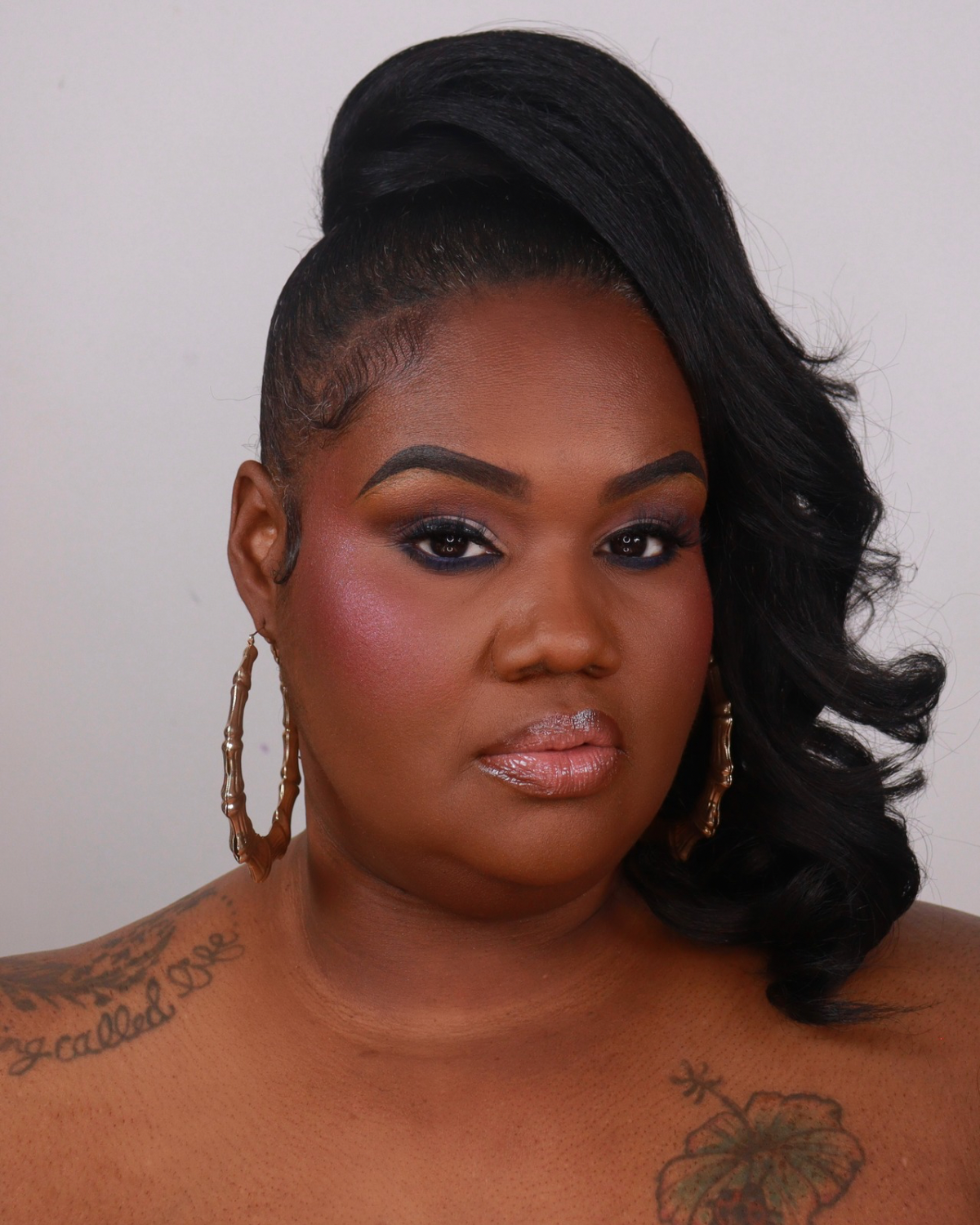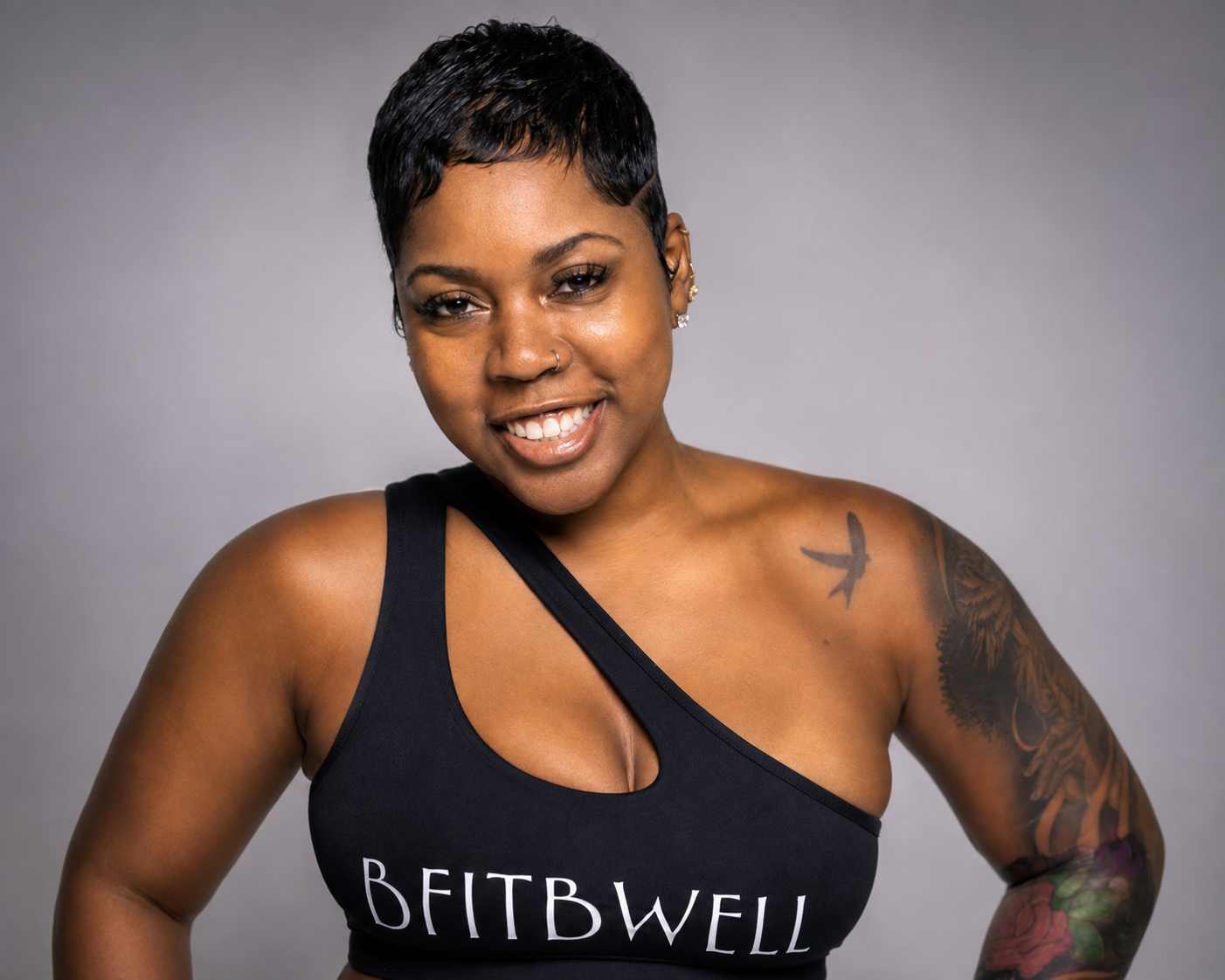
The affirmation music artist on surviving her darkest season, rejecting a work-centered life, embracing slowness, and learning that self-care is not something women have to earn.
I instantly became a fan of Toni Jones after Arnya T.M. Davis introduced me to her music.
I remember driving from Baton Rouge, Louisiana, to Brandon, Mississippi, and back, listening to Affirmations for the Grown Ass Woman. I played those affirmations believing that one day, if I listened and repeated them long enough, I would become the grown-ass woman Toni spoke about.
Today, I feel like I am her.
And in many ways, Toni Jones helped guide me there.
Her music challenged me to think about how the woman I wanted to become would think, speak, love, work, and move through the world. It pushed me toward accountability. It made me reconsider relationships. Most importantly, it made me more aware of the conversation taking place inside my own head.
That is the power behind Toni’s work. What sounds like music is also an invitation to examine yourself.
Long before millions of streams, performances around the country, and a catalog of affirmation music existed, Toni was a life coach trying to solve a problem she kept witnessing in women: They were exhausted.
They were doing, producing, aspiring, working, and caring for everyone else, but struggling to make room for themselves.
“There’s something unhealthy about having a work-centered life,” Toni says.
In 2019, she began creating music her coaching clients could use to practice healing wherever they were. Her first project, Affirmations for the Grown Ass Woman, was never originally intended to launch an entirely new career. Toni saw it as another resource for the women she served—a way to make the inner work portable.
Then people started listening, sharing, and transforming.
Today, Toni’s catalog includes projects such as Affirmations for the Grown Ass Woman, Affirmations and Chill, I See Me Mantras, Get Cha Mind Right, Affirmations of Self Love, and Affirmations for Gifted Lovers. The submitted article states that Spotify credits her with 50 million streams and that she created Affirmation Music, combining conversation-based affirmations with modern music rather than traditional meditation-style recordings.
But the story behind that success is much more complicated than a woman deciding to make healing music and watching it go viral.
At almost the same moment Toni’s work began to reach people, she was fighting to stay here herself.

When the Healer Needed Healing
Our conversation took place during Suicide Prevention Month planning, and I initially believed Toni’s connection to the subject came from someone she knew.
It didn’t.
Seven years earlier, Toni had attempted to take her own life.
She describes that period as one marked by depression, overwhelm, personal loss, relationship problems, a home break-in, career instability, and the feeling that everything familiar was collapsing at once. Eventually, the weight of it all became more than she thought she could carry.
She survived, but Toni is intentional about not wrapping what happened next in a neat inspirational bow.
After her attempt, she was hospitalized in a psychiatric facility, an experience she says left her more distressed rather than healed. When she eventually returned home, she knew she could not be alone immediately. For months, this grown woman slept between her mother and father as she tried to regain a sense of safety within her own mind and body.
Meanwhile, her music was going viral.
Hundreds of people were sharing it. Listeners described how Toni’s words were changing their lives, while the woman speaking them was experiencing one of the greatest crises of her own.
“No one told me that these two worlds could coexist,” she recalls.
She had assumed that to create something healing, she needed to be healed first.
Instead, life taught her something very different.
Purpose and pain could exist together.
Impact and struggle could exist together.
A woman could pour something meaningful into the world while still learning how to pour back into herself.
As the response to Affirmations for the Grown Ass Woman continued growing, Toni began asking herself a new question:
Maybe she was supposed to make music.
She started writing another album. Creating became something she could reach toward—not a magical cure, but another reason to remain curious about who else she might become.
Years later, Toni is still careful with the language she uses around survival.
She does not describe herself as someone who was suicidal once, conquered it, and now gets to deliver a perfectly packaged testimony.
She describes herself as being in recovery.
Today, she understands herself better. She recognizes her limits. She knows when to reach out. She has developed more tools for regulating herself when heavy emotions arise.
That distinction is important because so much of wellness culture sells us an ending.
Toni speaks about a practice.
The Way You Speak to Yourself Matters
One of Toni’s most important tools is also the foundation of her career: self-talk.
When she finds herself struggling, she intentionally speaks to herself with tenderness.
She might remind herself to eat. Drink tea. Call her mother. Rest.
“Talk to yourself like you’re somebody you love,” she says.
It sounds simple, but Toni, whose background includes psychology and a deep interest in neuroscience, sees intentional self-talk as more than a feel-good exercise. She views our internal language as part of the process through which we begin changing thought patterns, choices, behaviors, and ultimately how we experience our lives. Toni Jones Is Choosing Herself—…
It also explains why affirmation music resonated so deeply with women like me.
You don’t have to sit at a desk with a workbook.
You can drive.
Clean.
Get dressed.
Run your business.
Cry.
Start again.
And somewhere in the background, a different voice can begin interrupting the one telling you that you are inadequate, behind, unwanted, or incapable.
Toni calls the music medicine.
I understand exactly what she means.
There was a period when I listened to her song “Worth Ethic” for hours at a time during road trips. Looking back, I wasn’t simply enjoying a song. I was rehearsing another way of seeing myself.
And that is what Toni has built—a body of work that allows women to practice a new internal language until that language starts sounding like their own.

The Radical Practice of Going Slow
For a woman whose career continues expanding, Toni’s greatest non-negotiable is surprisingly simple.
She refuses to build a life that requires her to constantly move fast.
“I am not wired to live a fast-paced life,” she says.
She needs slow mornings.
Slow afternoons.
Slow evenings.
Not because Toni lacks ambition, but because she now understands the cost of ignoring her own capacity.
Slowness allows her to notice herself. To hear her intuition. To recognize the seasons when more momentum feels right and the seasons when pulling back is necessary.
That part of our conversation hit home for me.
As a recovering workaholic myself, I have been intentionally trying to slow down my mornings. Instead of waking up and immediately checking emails, answering messages, and mentally running through everything I need to accomplish, I’ve been working to create space before the work begins.
Toni reminded me that slowing down does not always require blowing up your entire life.
Sometimes it is 10 minutes.
She encourages women to find tiny places to stop rushing: taking their time applying lotion after a shower, sitting in a bath longer, noticing their bodies, expressing gratitude, and letting an ordinary ritual become an act of presence.
The point is not adding another obligation called “self-care” to the to-do list.
It is learning to experience your own life while you are actually living it.
“Those tiny practices,” Toni says, “stack.”
And maybe that is where many of us get self-care wrong.
We imagine it must be expensive, dramatic, luxurious, or Instagrammable when sometimes the most rebellious thing a Black woman can do is stop rushing herself.
Caring for Toni
Toni’s own self-care toolbox is personal and practical.
She spends time in nature. She studies herbalism. She meditates, journals, and prays. She dances—to gospel, house music, Afrobeats, whatever allows her to reconnect with her body. She eats foods that feel nourishing. And when she becomes emotionally concerned about herself, she tells somebody.
That last practice may be one of the most important.
“I tell people I’m not okay,” she explains.
Not everyone is entitled to that vulnerability. Toni reaches for people she trusts to witness what she is experiencing without immediately trying to rescue, correct, or rush her through it.
Asking for help is central to the way Toni now discusses suicide prevention, too.
Her message isn’t that a positive affirmation magically eliminates suffering. It is that when your own mind becomes an unsafe place to be alone, reaching beyond yourself matters.
Don’t suffer silently.
Mission, Money, and Building Differently
The woman who originally created music hoping it might support her coaching practice now has to think about something else: business.
Millions of streams do not erase the tension between mission and money.
Toni admits she is still learning.
She knows the impact exists. She has heard from listeners who discovered her music while experiencing deep despair and say something shifted afterward. She understands affirmation music can reach people who don’t even know the genre exists yet.
What she refuses to do is build that reach by sacrificing herself.
Toni wants collaborators who understand both the vision and the woman carrying it.
She isn’t interested in being placed “on the racehorse” and working until there is nothing left. Instead, she is imagining what it looks like to become a more grounded artist and businesswoman while protecting the pace of life she now knows she needs.
There is something especially powerful about that decision.
Because for a woman whose career was born alongside recovery from a suicide attempt, success cannot simply mean bigger.
Success must also mean sustainable.
The Full Range of Womanhood
When I asked Toni our signature question—What’s your SwagHer? How do you show up in the world?—her answer felt completely consistent with everything else she had shared.
Her SwagHer is freedom.
Specifically, the freedom to express the full range of her femininity.
Toni can be country.
City.
Spiritual.
Fashionable.
Tomboy feminine.
Dressed up one day and completely uninterested in fashion the next.
She does not want wellness, spirituality, womanhood, or even her own public image to become another box she has to squeeze herself inside.
“That’s my swag,” she says. “I never wanted to be typecast.”
For Toni, femininity is not a performance with one approved costume. It is permission to experience the full range of herself without constantly editing that woman into something easier for other people to categorize.
Perhaps that is also what becoming a grown-ass woman really means.
Not having all the answers.
Not being perpetually healed.
Not being productive enough, successful enough, spiritual enough, soft enough, or strong enough.
But knowing yourself well enough to stop abandoning yourself.

Choosing Yourself Changes What You Give
Toward the end of our conversation, Toni returned repeatedly to the land.
She wants women in nature. Gardening. Meeting local farmers. Tending something. Observing what the Earth teaches about growth, rest, cycles, creation, and renewal.
It is part of a larger lesson Toni believes women must relearn: choosing ourselves.
We have been conditioned to equate goodness with self-sacrifice—to believe love means becoming endlessly available while placing ourselves somewhere near the bottom of our own priority lists.
Unlearning that can be messy.
But Toni believes everyone ultimately benefits when a woman is no longer giving from depletion.
“When you choose yourself,” she explains, “what you create and the ways you love begin coming from a full place.”
Then others receive the overflow instead of pieces taken from a woman running on empty.
Maybe that is why Toni Jones was always supposed to be our self-care cover woman.
Because this isn’t really a story about bubble baths, vacations, or temporarily escaping your responsibilities.
It is about building a relationship with yourself strong enough to survive your changing seasons.
It is about understanding when you need to move and when you need to stop.
When you need to affirm yourself and when you need to call somebody else.
When you need to work and when work has taken too much.
When the version of you who once knew how to survive has reached the end of her assignment—and another woman is ready to emerge.
Years ago, I drove those Mississippi highways listening to Toni Jones tell me who a grown-ass woman could be.
At the time, I thought I was listening so I could eventually become her.
Now I understand something different.
Maybe the woman was already there.
I just needed to learn how to speak to her.
And, perhaps most importantly, how to choose her.
Connect with Toni Jones:
Website: www.iamtonijones.com
Instagram: @iamtonijones