Sometimes the story makes sense later.
My first introduction to French demi couture designer Valerian Hughes came through film. My understanding of him came through fabric.
Four days after attending a private screening of “Bridges” at Dolby Laboratories, I found myself seated beneath the tiled ceiling of The Prince George Ballroom for his Fall/Winter 2026 presentation, Rêve Éveillé. This time, there were no missing subtitles. Just movement, structure, and intention.

The documentary examined artforms, identity, and connection across cultures. As a viewer, I struggled to connect with its rhythm. The pacing felt uneven, and some transitions lacked clarity. The French dialogue appeared without subtitles, making immersion more difficult.
The film, produced by Jamila Sangaré, moves intimately through former New York City Mayor Adams’ family and Hughes’ personal and creative world. For viewers without that familiarity, the connection can feel thin. I wanted a stronger through-line to hold my focus.
Still, intention holds weight. And sometimes understanding doesn’t arrive in conversation; it arrives in craft. At New York Fashion Week, the craft was evident.
Inside the Prince George Ballroom, the setting felt historic and ornate. The space demands presence but rewards restraint. Neo-Renaissance columns framed the room with authority. Before the runway began, a dancer moved across the floor with fluidity. Her performance felt atmospheric and ceremonial. It prepared attendees for a quiet invitation into the world Hughes was about to present.
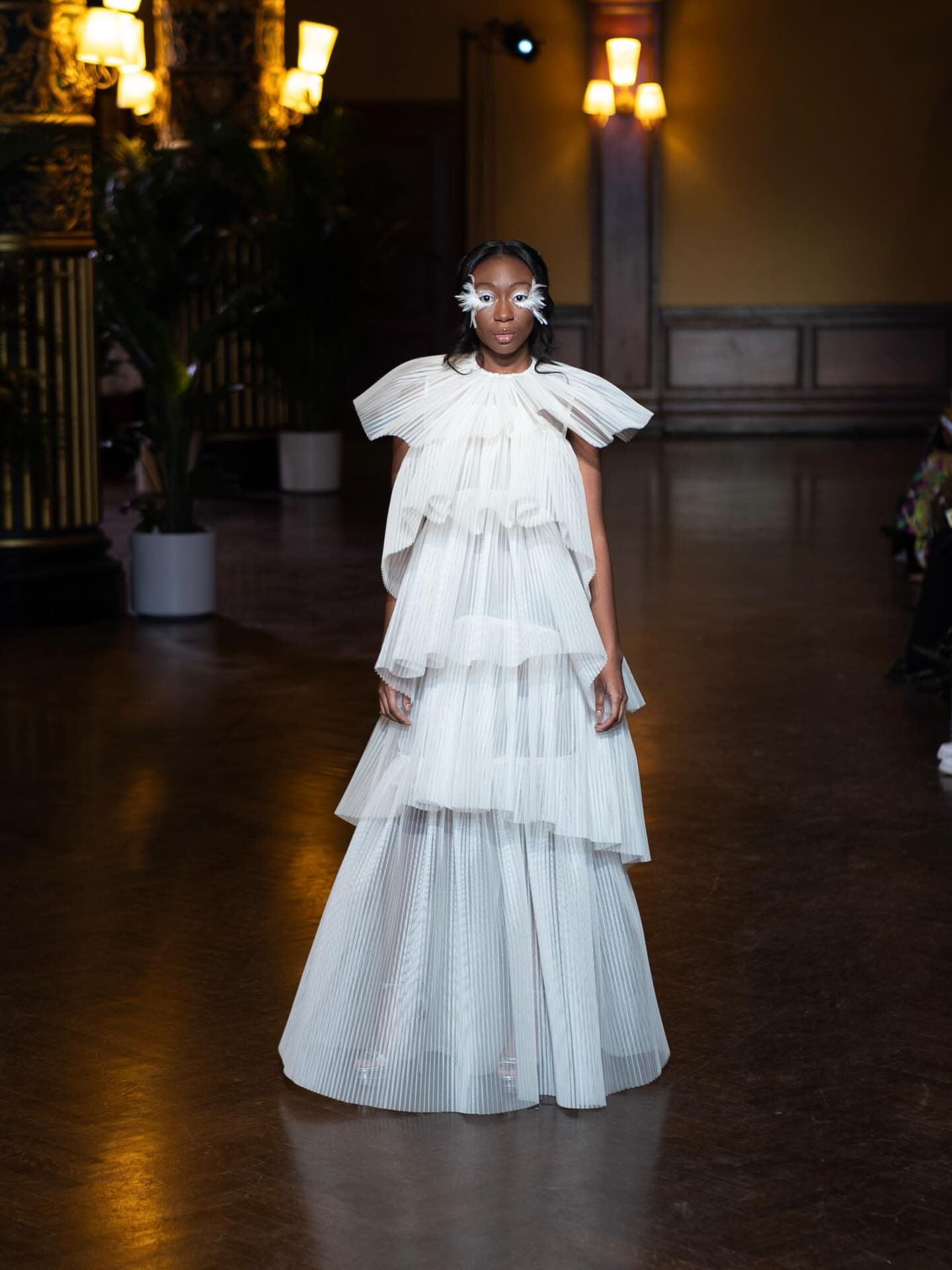
Then the collection unfolded. Inspired by the natural environment of Saint Barth’s, like plants, the trade winds, and the reflection of the sun on the sea. Crepe, chiffon, organza, and tulle carried lightness without weakness. Earth tones of brown and chocolate grounded the collection, while nude, ivory, red, and gold shimmered like flecks of fire touching water at dusk.
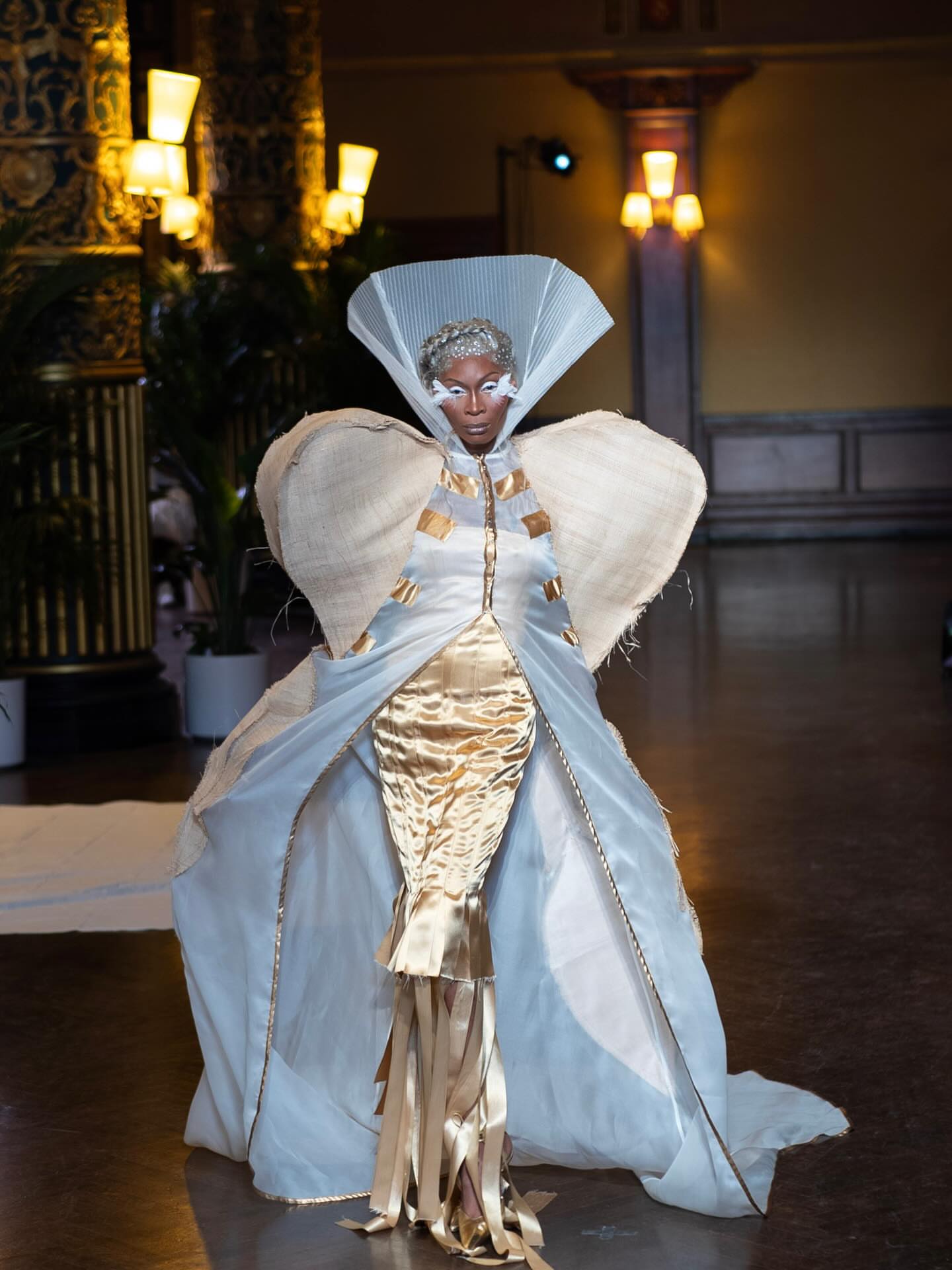
As a designer myself, what stood out was the balance. Golden silk satin became fringe hems that moved with intention. A basketweave bodice introduced texture within structure. Raw-edge linen, often associated with simplicity, was elevated into eveningwear with authority. Raffia felt regal. Chiffon silhouettes moved alongside sharply defined shoulders and sculpted sleeves. Some looks were fluid and romantic, while others were architectural and firm. Opulence met earthiness without contradiction. Nothing felt ornate or unfinished. Instead, there was an interchange between softness and control. He is a designer fully aware of proportion and presence.
Hughes has described the garment as a jewel case for the woman who wears it. On this runway, that philosophy was clear. The pieces framed the body rather than overwhelming it. They allowed movement. They allowed breath.
Then came the finale. A gown was painted in real time, transforming the runway into an interactive canvas. The act was less about drama and more about evolution. Fashion became a process. Process became performance. Performance became a statement. The attendees reflected all positive receptions.
At that point, something settled for me. If the documentary aimed to explore art as a bridge between creative expression and cultural understanding, the runway demonstrated it without explanation. Here, connection wasn’t spoken about; it was constructed in silk, chiffon, and pigment. The bridge existed in execution. Valerian Hughes’ New York Fashion Week debut relied on refinement. Ethereal but grounded. Elegant, yet aware of the earth it referenced.
Sometimes the story doesn’t land the first time you hear it. And inside The Prince George Ballroom, the waking dream finally felt fully realized.