Every once in a while, fashion stops being about clothes.
I RSVP’d for the Styled by Poshmark Shopping Experience at a later time slot on Saturday afternoon (or so I thought, strategically). I imagined a calmer crowd, lightly picked racks, and a casual browse between shows. In my mind, resale shopping still lived somewhere between digging and luck.
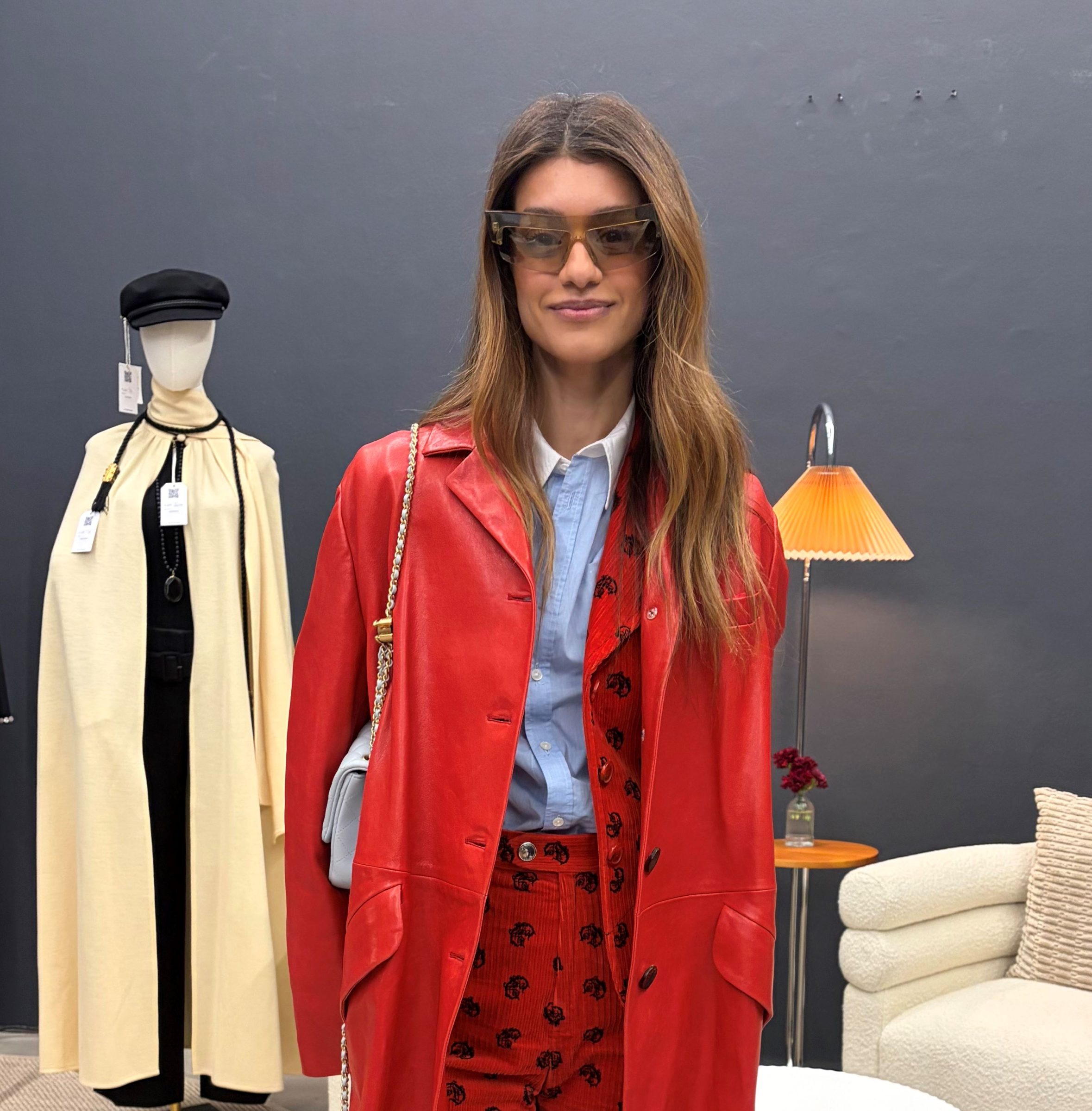
The pop-up space in the Lower East Side of Manhattan didn’t feel like a thrift store or a sale. It felt curated. The styled sections created for top sellers, statement coats beside structured blazers, handbags displayed like gallery artifacts, and shoppers scanning labels with the focus of editors pulling for a shoot. Attendees weren’t just buying clothes; they were buying statements and hunting value.
And then I had a realization which seemed a little too honest for a Saturday afternoon during Fashion Week.
I grew up during a time when new and luxury designer goods equated to success. In my twenties, I fit easily into size 2s and 4s, sample sizes hanging effortlessly on my frame, and I took full advantage of it. I appreciated every free or discounted sample I carried home from the companies I worked for. Fashion rewarded proximity and access, and I was close enough to both. Now in my forties, along with body changes comes a stronger sense of self and what I actually want to represent outwardly.
Standing there flipping hangers and quietly hoping to find a special piece that hadn’t already been claimed, I wasn’t discovering resale culture. I was recognizing how easily fashion teaches us to over-consume when we mistake availability for necessity. That was the moment the experience stopped being about shopping and started being about outlook. What I didn’t expect was how intentional the space itself felt.
The Discovery
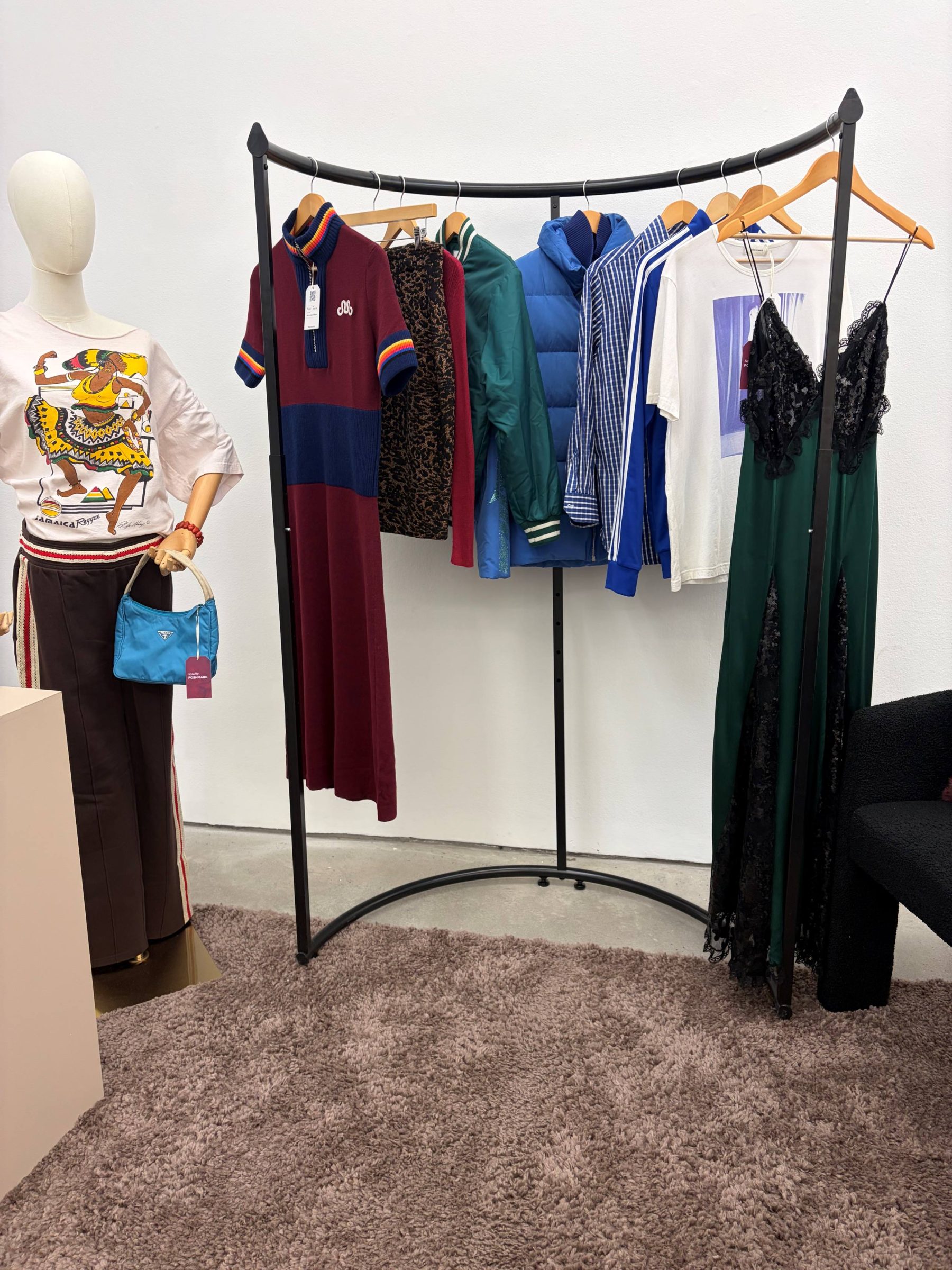
Once my internal monologue quieted down, I actually started looking around. What stood out immediately was the order. Not the color-coded retail kind, but the kind created by people who understand clothes. The racks were organized by sellers and aesthetics rather than strict categories. Dresses blended into evening pieces, outerwear held presence, and accessories were displayed with the kind of care usually reserved for department store cases. This wasn’t a pile. It was a point of view.
Prices ranged from about $30 to $6,000. Dramatic at first glance, until you realize you’re not comparing it to retail. You’re comparing it to access. A structured jacket that normally requires a budgeting conversation suddenly felt reasonable. A designer bag wasn’t a purchase for someday. It was a “think-about-it” purchase.
There weren’t clear men’s and women’s sections either. There were more women’s items overall, but the men’s pieces were integrated where they made sense; blazers alongside tailoring, ties near shirting, curated by style rather than gender. Nothing felt discarded. All appeared edited.
Naturally, I did what every shopper does at an event like this. I went straight to the sizes that disappear first. There were fewer options left in my range, which told me two things immediately. First, I should have come earlier. Second, women who understand fit also understand value. Still, I found a few pieces that worked for both my body and my budget, and it felt more satisfying than leaving with something brand new at full price.
Because at that point, the experience shifted. Instead of asking, “Do I like this?” I started asking, “Does this deserve to stay in circulation?” As a designer, that question lands differently. I’ve contributed to a system built on constant newness. However, standing in a space where garments had a second life, I could see the alternative. The clothing wasn’t finished after the first owner. It was continuing its story. And suddenly resale didn’t feel secondary to fashion. It felt closer to its original intention. Then I realized the experience wasn’t only about my closet.
The Context
After leaving the pop-up, the experience stayed with me longer than the shopping did.
Part of it was personal, but part of it was bigger. For decades, luxury has carried meaning in Black communities that goes past aesthetics. It has represented access, arrival, and the ability to participate in spaces that historically excluded us. Looking polished was never shallow. It was often strategic.
Today, Black consumers hold nearly $2 trillion in spending power, yet our relationship to fashion purchasing still frequently reflects older retail habits- buy new, keep briefly, and move on. Meanwhile, entire secondary markets are being built around the very items we release back into circulation.
According to Pew Research, using Census Bureau data, about 6% of Black adults earn $100,000 or more annually. That number continues to grow, and with it comes expanded access to higher-quality goods. However, access alone doesn’t automatically create long-term value. Strategy does. That’s where resale quietly changes the equation.
Instead of fashion being a one-way expense, it can become a rotational expense. A handbag isn’t just a purchase. It becomes temporary ownership. A statement coat isn’t a splurge. It’s an asset that can be moved again as your style evolves. The closet stops behaving like storage and starts behaving like inventory.
For me, it wasn’t even social media trends as much as the targeted ads that follow you after one late-night browse. One search turns into a week of finely curated temptation, and suddenly you’re shopping for ideas instead of needs. Resale platforms and even simple clothing swaps interrupt that cycle. They let style stay expressive without requiring a constant financial reset.
Generationally, the shift is already happening. Gen Z treats thrifting as a lifestyle, Millennials lean toward experiences over accumulation, and Gen X (my generation) is entering peak earning years with a growing interest in quality over quantity. The resale market sits directly in the middle of all three. Which is why the lesson from that Saturday wasn’t really about buying secondhand. It involved understanding ownership differently.
Fashion doesn’t lose value when it changes closets. Sometimes that’s exactly where the value begins. So naturally, the question became practical: What do you actually do with this information?
The Strategy
So what does this actually look like in practice?
First, it means reinterpreting what “new” means. New to you can be just as effective as new from a store. In fact, in many cases, it’s smarter. There are real advantages to leaning into resale, especially for women who care about style but also understand value.
1. It protects your spending power.
Instead of absorbing the full cost of every trend cycle, resale lets you rotate pieces without having to start from scratch. You buy thoughtfully, wear intentionally, and resell strategically. That’s not cheap. That’s efficient.
2. It reduces waste without giving up style.
Fashion is one of the most waste-heavy industries in the world. Keeping garments in circulation extends their life and reduces the need for constant production. Sustainability doesn’t have to look earthy. It can look editorial.
3. It makes luxury accessible without economic burden.
High-quality construction lasts. Designer handbags, tailored blazers, and structured coats are pieces that commonly retain value because they were made to do so. Buying them secondhand lowers the entry point while preserving the craftsmanship.
4. It turns your closet into a resource.
We rarely think about selling as part of personal style, but it should be. The dress that served you for two events can serve someone else next. Instead of collecting dust, it can recover costs.
5. It creates community.
Beyond sites like Poshmark, there’s something powerful about clothing swaps among friends. Style becomes shared, not hoarded. Taste circulates. So does opportunity.
What’s Worth Buying Secondhand
Not everything needs to be pre-owned. However, some categories are almost designed for resale.
Handbags: They hold value better than most items, and wear is often minimal. Classic silhouettes especially age well. This is one of the smartest entry points into luxury.
Blazers and Jackets: Tailoring lasts. Vintage construction can actually surpass the quality of modern fast fashion. A strong blazer doesn’t expire.
Statement Pieces: Editorial coats, bold dresses, structured evening wear. These are pieces you may only wear occasionally, which makes resale a good option.
Jewelry: Timeless and often lightly worn. The right piece can elevate everything without requiring a full wardrobe refresh.
Ultimately, looking expensive isn’t about spending more. It’s about choosing better. And perhaps more importantly, it’s in knowing that style is not disposable, and neither is your money. And that brings me back to the moment I walked out.
What’s Better to Buy New
Resale works for a lot of fashion, but some things just make more sense to purchase new.
Intimates: This is mostly about comfort and cleanliness. Undergarments shape to the person who wears them first, and even if they appear unworn, the fit is unpredictable. Some items shouldn’t require second-guessing.
Footwear: Shoes break into someone else’s walk. Over time, they carry pressure patterns (and maybe even energy) that don’t match your body, and your feet feel it immediately. For everyday wear, a fresh pair usually lasts longer and supports you better.
Makeup & Beauty Products: Beauty products have a shelf life, and skin plays an important role in our immune system. Even high-end products aren’t worth the uncertainty. This is one category where new really means peace of mind.
Value Over Newness: A Shift in Viewpoint
By the time I left the pop-up, I hadn’t just found a few pieces. I had changed my perspective. For years, fashion meant keeping up with new arrivals, new drops, new reasons to justify another purchase. However, somewhere between sample sizes, real life, and targeted ads that know me a little too well, I realized style doesn’t actually require constant replacement. It calls for intention.
Now I think less about how often I can refresh my closet and more about how long I can live with what I choose, what I keep, what I release, and what deserves another life beyond me. Age changes your measurements, but it also changes your priorities. I still love fashion, I just respect it differently now. Not everything needs to belong to me forever, and not everything needs to be brand new to feel special.
Looking expensive isn’t about paying retail. It’s regarding understanding value, and dressing as you know it. Sometimes the smartest thing you can wear is perspective. We talk trends all the time. Let’s talk circulation. Share your best secondhand scores or the closets you swear by. Fashion always works better as a conversation.
Read More Beauty and Fashion.