Note: The following fashion pieces are from English designer, Stella McCartney Stella MCartney SS18 Collection.
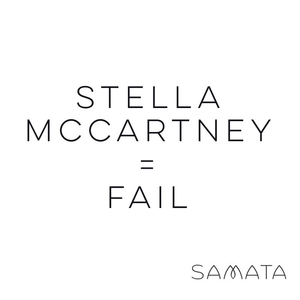
No Stella McCartney, JUST NO. You can’t get away with selling traditional West African style dresses which our women wear for everything from market shopping to special events for extortionate prices without even using a single model of color. If you wanted to do this properly, hire model Hamamat and give kudos to our cultures properly! Are you sending a percentage of proceeds to fashion colleges in West Africa? Was an African model used anywhere in this campaign? These prints, their colors and style all have meaning in our cultures. They aren’t just ‘vibrant playful summer prints’; the print is called #Ankara Print. I don’t see the word ‘African’ in your product description.
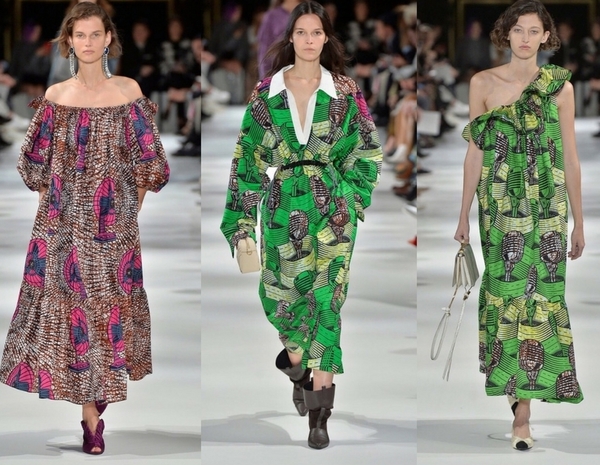
The fact that this was done in collaboration with Vlisco says a great deal; the company knows how much these dresses sell for in the markets of West Africa and the textiles’ significance…Their entire market strategy is focused on the continent. Please don’t buy these dresses and wear them to watch Black Panther. Instead support authentic emerging brands like Sika, Chen Burkett New York, By Natacha Baco, Bazara’Pagne who sell at prices the originators would pay. How you can help with this problem? Tag and support brands honoring the culture.
Cultural Appropriation = the concept of a powerful brand appropriating and profiting from a cultures’ history or identifier, whilst leaving the less powerful group hurt and insulted. Click my stories (@iam_samata) to learn about the 3-rule Scadafi system when it comes to cultural appropriation….source, significance and similarity.
Tartan is associated significantly with Scotland though its earliest sightings were in Austria and China. Ankara print was created by the Dutch for the Indonesian market, but it did not take off there and was greatly adopted instead by the West African market. Since the late 1800s it has been a cultural identifier for the West African market. The prints and symbols used in Ankara are lifted directly from West African culture/history. So when a brand uses this fabric without acknowledging its cultural significance = cultural appropriation.
Samata
Samata is a British born Ghanaian entrepreneur working across fashion and media. The published author (The Fashion Designer’s Resource Book – Bloomsbury Publishing), writer (The Guardian, VOGUE, Huffington Post) and designer is also known for her workÂ
Samata, a talented presenter and producer, is committed to creating positive change within all the fields she operates in and influences, and her work has been featured in VOGUE (USA & UK), E! Entertainment, Hello Giggles, The Huffington Post, Women’s Wear Daily, ELLE, InStyle, Essence, Red Magazine, Refinery 29 and more. The former Fashion Editor of The Talent Magazine, she is also Editor of SamataHome.com, a portal for her work and personal style, a board for curated style pointers and a central hub for the like-minded to discover and connect. Most recently Samata inspired THE TRIBE, a global collective, created for women to empower and celebrate each other.