Now and then, New York slows down just enough to remind you that it’s still a city built on neighborhoods, not just skylines.
The unveiling of ODB Jones Way in Brooklyn was one of those moments. What could have easily been another ceremonial street renaming instead seemed like a neighborhood reunion. Generations gathered along the corner of Franklin and Putnam avenues in Bedford-Stuyvesant, where neighbors, lifelong fans, elected officials, and members of the Jones family came together to celebrate the life and legacy of Russell Tyrone Jones, better known to the world as Ol’ Dirty Bastard. Hip-hop filled the streets as folks proudly wore Wu-Tang apparel, relived memories, and sang along to ODB classics while waiting for the historic unveiling. There was an unmistakable warmth in the air. People greeted one another like old friends, even if they had never met before.
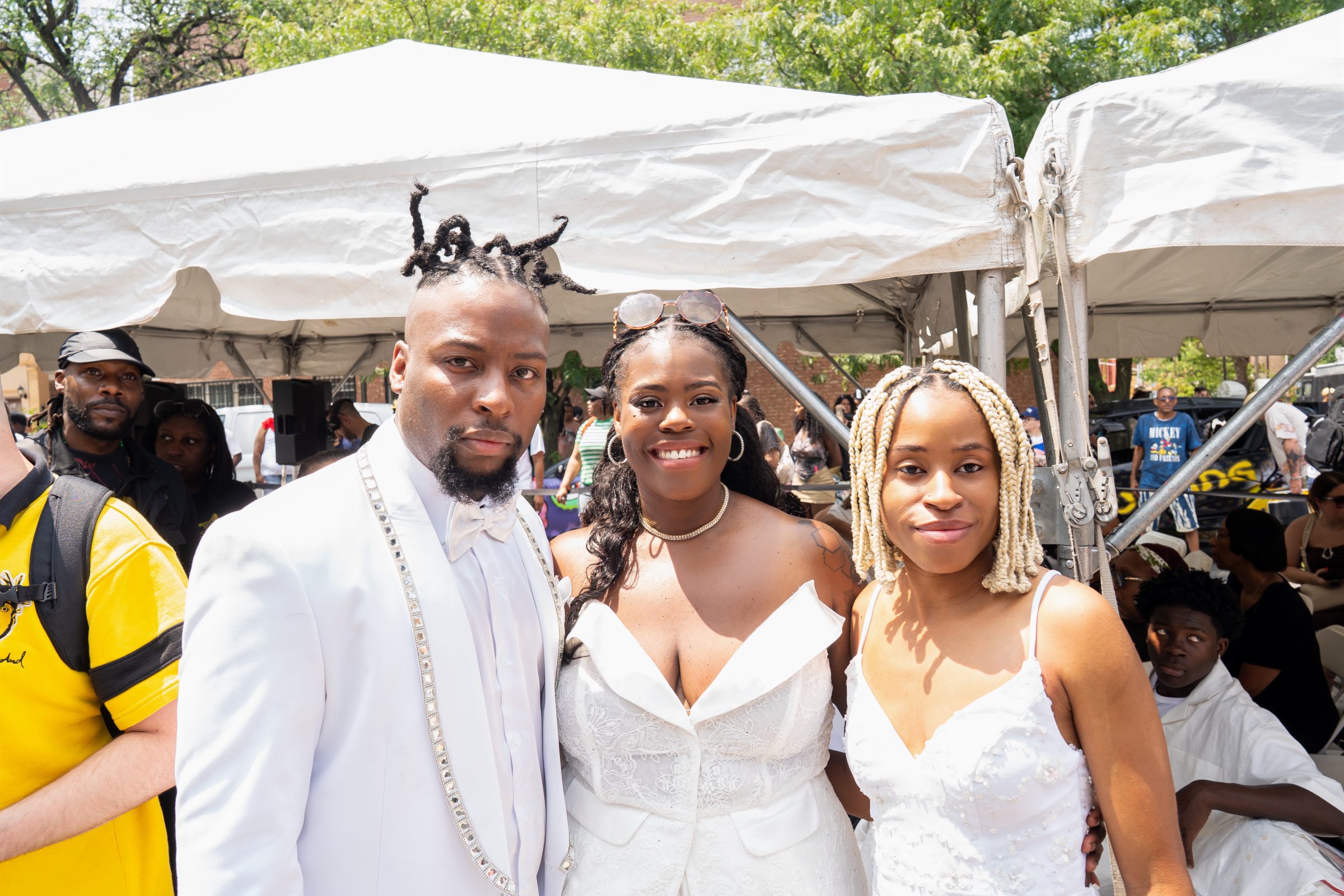
The Jones family, dressed in white, stood close together beneath the soon-to-be-revealed street sign. Seeing generations of the Jones family together made the moment seem bigger than hip-hop. It felt like Brooklyn had come together to celebrate one of its own, while the people who loved Russell Jones most shared him with the rest of us. For a moment, I was reminded of the Old New York City I grew up in, where neighbors showed up for one another, music filled the streets, and community was simply a way of life.
As the cover came down and ODB Jones Way was officially revealed by Taniqua Jones and NYC Council member Chi Ossé, applause erupted. Family members embraced, cameras clicked, and fans cheered as the new street name added a new chapter to Brooklyn’s rich hip-hop history. But as meaningful as the street sign itself was, what stayed with me most wasn’t the unveiling. It was witnessing a family, led by Russell Jones’ eldest daughter, Taniqua Jones, continuing the work of preserving not only the legacy of an iconic artist, but the memory of the man they knew as Dad.
A Brooklyn Original
Long before he became the wildly original Ol’ Dirty Bastard, there was Russell Tyrone Jones, a Brooklyn kid whose roots ran deep in Bedford-Stuyvesant.
The newly designated intersection of Franklin and Putnam avenues wasn’t chosen by chance. Putnam Avenue was home to his grandmother, making the neighborhood more than a backdrop in his story. It was part of his foundation. Just steps away, a mural inspired by the cover of his groundbreaking 1995 solo debut, Return to the 36 Chambers: The Dirty Version, has stood since 2008, quietly reminding passersby that one of hip-hop’s most original voices came from these very streets.
For many, Ol’ Dirty Bastard was one of the founding members of the legendary Wu-Tang Clan. For Brooklyn, he was one of its own.
While the Wu-Tang Clan will forever change hip-hop, the foundation of “Wu” was built on something even deeper than music. Russell Jones, Robert “RZA” Diggs, and Gary “GZA” Grice were cousins before they became rap legends, an indication that one of the greatest groups in hip-hop history was rooted in family long before it became a global movement.
Method Man once said there was “no father to his style,” and decades later, it’s still one of the most fitting descriptions of Ol’ Dirty Bastard.
His vocal tone was raspy, soulful, gritty, and completely unpredictable. One minute he could remind you of James Brown with his raw emotion, and the next he sounded like he was yelling from somewhere completely outside himself. There was no formula to it. No blueprint. While many of us hip-hop fans can detect traces of Biz Markie’s playful spirit in his delivery, ODB’s style belonged to him and him alone. Whether he was rapping, singing, or somewhere in between, he commanded your attention because you never knew what was coming next.
Ironically, for someone whose style was described as having “no father,” one of Russell Jones’ greatest roles was being one.
Today, more than two decades after his passing, it is his children who are making sure that his legacy continues to grow. From the Rock & Roll Hall of Fame induction with the Wu-Tang Clan to the unveiling of ODB Jones Way, each milestone reflects not only the continuing impact of his artistry, but the dedication of a family determined to preserve the man behind the music.
Leading the Charge
Street signs don’t rename themselves. Behind every dedication ceremony are years of paperwork, planning, phone calls, meetings, and people willing to keep pushing long after the cameras are gone.
For Taniqua Jones, the unveiling of ODB Jones Way wasn’t simply another public appearance. It represented years of advocating for her father’s legacy while balancing the emotional weight that comes with being his eldest daughter.
“It was hectic,” she admitted with a laugh. “Very hectic. Tedious. A lot of pressure.”
Looking around that afternoon, it would have been hard to tell.
She greeted family members, embraced supporters, coordinated with organizers, and somehow still found time to share stories about the father she continues to honor. There wasn’t a moment where she appeared overwhelmed, but as anyone who has organized a community event knows, the calm everyone else sees is often built on months of work they never will.
When the brown paper covering finally came down, and the green ODB Jones Way sign was revealed, the pressure gave way to something much different.
“I feel accomplished,” she said. “I feel blessed. I’m truly proud of myself for pulling it all together and making it happen.”
For many in attendance, it was another milestone in celebrating one of hip-hop’s most original artists. For Taniqua, it was something more personal. It was another promise kept.
More Than Ol’ Dirty Bastard
One of the things that stood out most during our conversation wasn’t what Taniqua said about Ol’ Dirty Bastard.
It was what she shared about Russell Jones.
Ask almost anyone about ODB, and they’ll talk about the music, the unforgettable performances, or the larger-than-life personality. Ask his daughter, and a different picture begins to emerge.
“I wish more people knew how loving he was,” she told me. “He loved children. He loved helping people. If he had it, everybody around him had it. He just wanted everybody to be okay.”
Standing there on Franklin Ave, it became clear why the ceremony felt bigger than hip-hop. The street sign honors Ol’ Dirty Bastard, but the stories his family continues to tell honor Russell Jones. Together, they complete the picture.
She was smiling and gracious as she spoke, not like someone recounting stories she’d heard, but like someone revisiting memories that still make her proud.
Those moments don’t usually make headlines. They don’t appear in documentaries or music retrospectives. Yet they’re often the memories families hold onto long after the spotlight fades.
Listening to Taniqua speak about her Dad, it became apparent that preserving her father’s legacy is about celebrating the artist the world remembers, and it’s also about introducing people to the man his family still misses.
A Family Carrying the Torch
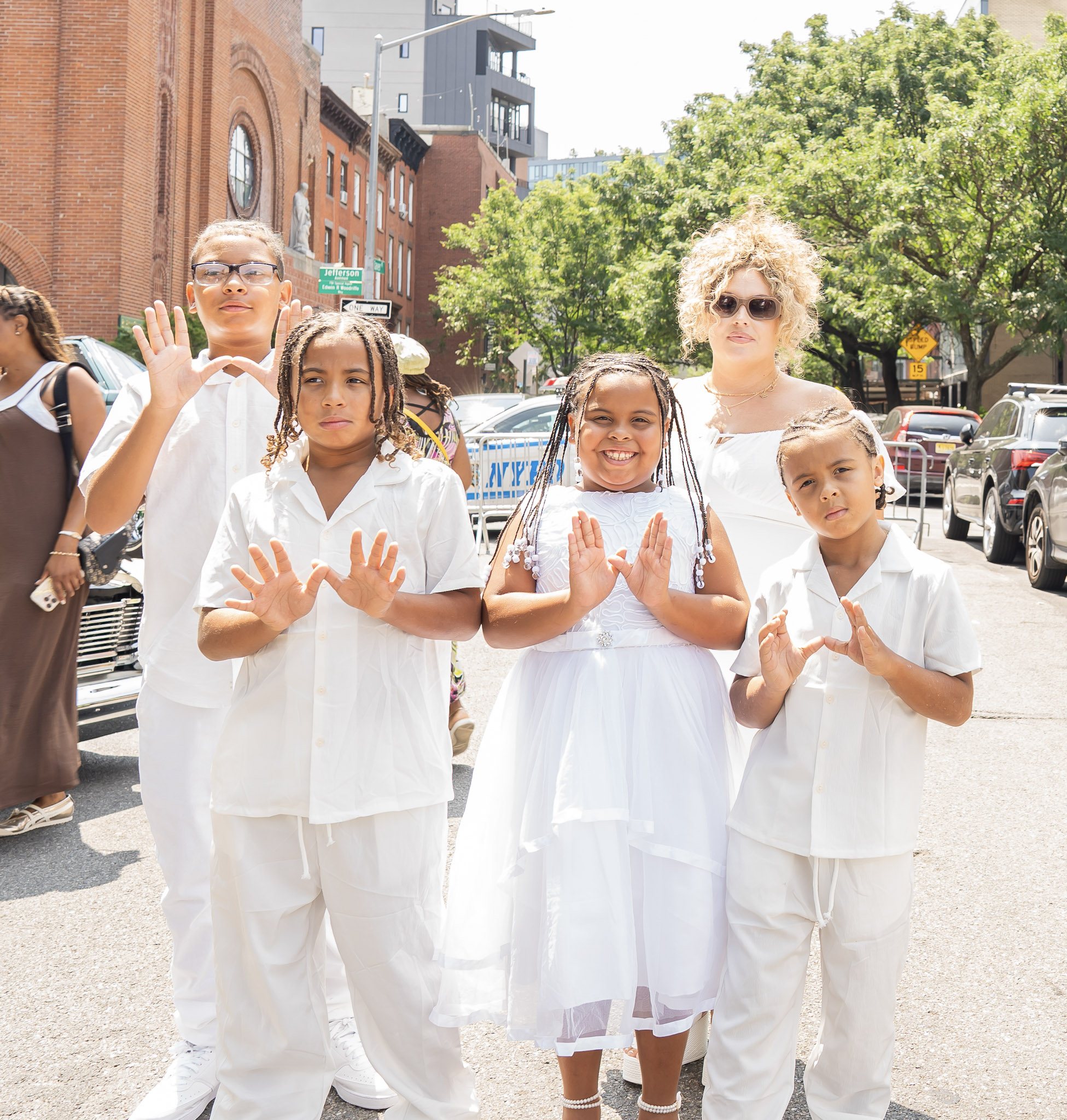
For many families, preserving a loved one’s legacy happens quietly through stories shared around the dinner table or old photographs passed from one generation to the next. For the Jones family, that responsibility has unfolded on a much more public stage.
Each of Russell Jones’ children has found an intentional way to honor the man the world knew as Ol’ Dirty Bastard while introducing new generations to the person they knew as Dad. Although each has taken a different path, their collective efforts continue to ensure that his story reaches audiences well beyond the generation that first embraced his music.
Bar-Sun Jones, better known to fans as Young Dirty Bastard ( ODB’s eldest son), shows that responsibility coming alive every time he steps on stage. Performing alongside the Wu-Tang Clan, he carries his father’s voice and energy to audiences around the world while adding his own unique chapter to the family’s story. He is also preparing to portray his father in an upcoming biopic, an opportunity to introduce Russell Jones’ story to an entirely new generation. One of the day’s most emotional moments came after the unveiling, when he quietly knelt in tears beneath the newly revealed ODB Jones Way sign. Bar-Sun did not have to say anything to be understood. It was a son paying tribute to his father.
His sister, Shaquita Jones, honors her father’s legacy through her own creative work. As a writer, designer, and entrepreneur, she continues to develop projects that celebrate his life while offering fans new ways to engage with his legacy. Her work reflects the same spirit of creativity and individuality that made Russell Jones so distinctive.
At the center of many of these efforts is Taniqua Jones. Whether organizing events, speaking with media, advocating for her father’s legacy, or sharing her family’s story on Growing Up Hip Hop: New York in 2019, she has become one of the family’s most recognizable ambassadors. Watching her throughout the afternoon, it was clear that this work isn’t about recognition. She has a responsibility and understands that preserving her father’s legacy means making sure people remember both the artist who changed hip-hop and the man who meant so much to his family.
These siblings carry that responsibility differently through music, art, entrepreneurship, and community building. Together, they’ve shown that preserving a legacy means making sure the next generation has the opportunity to understand why Russell Jones still matters.
More Than a Name on a Street Sign
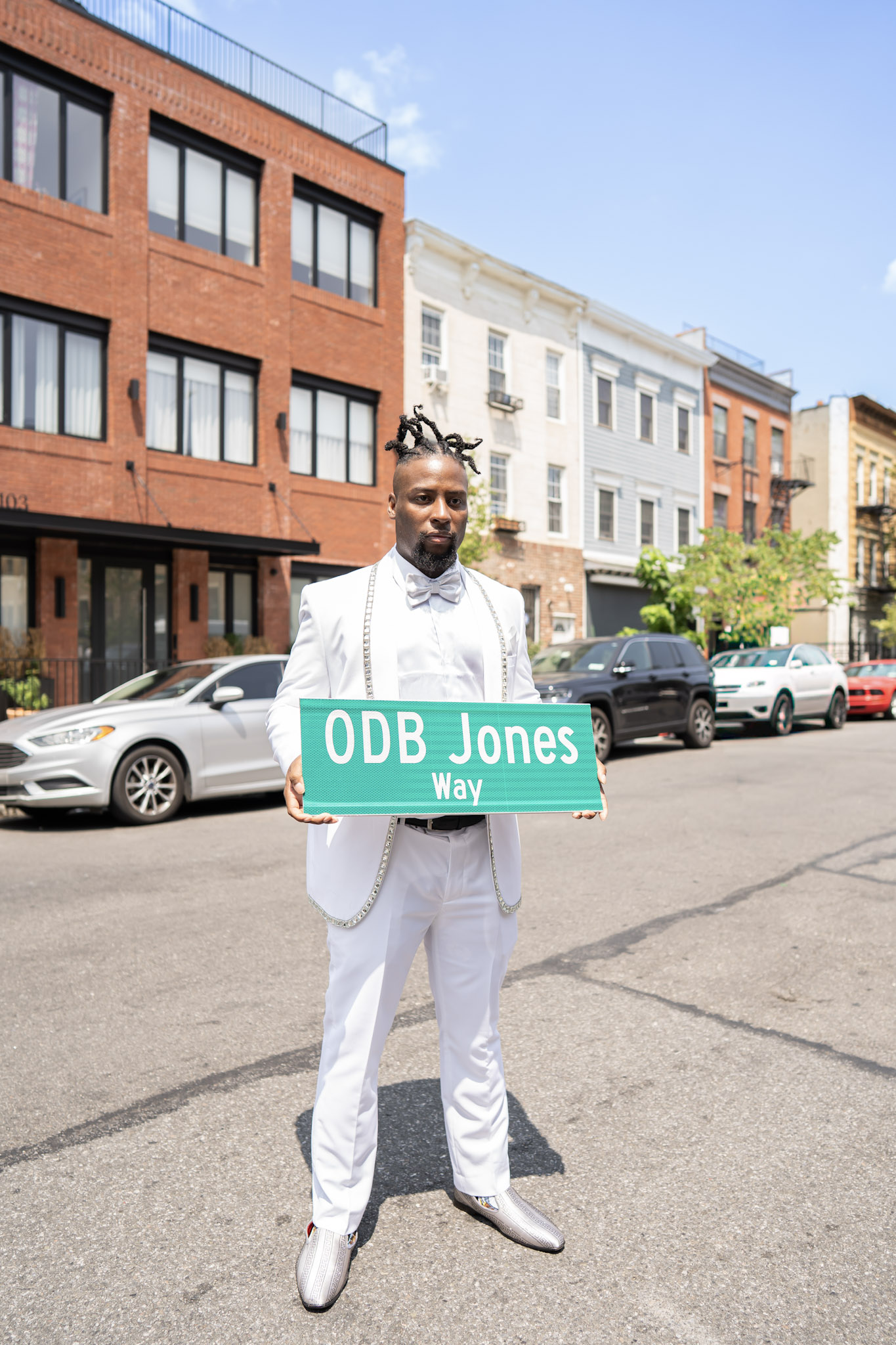
Street signs tell people where to go, but every so often, one tells us where we’ve been.
For Bedford-Stuyvesant, the unveiling of ODB Jones Way wasn’t simply about honoring one of hip-hop’s most recognizable voices. It was also about reclaiming a piece of neighborhood history.
As Councilman Chi Ossé, who spearheaded the street co-naming initiative, explained, many streets throughout Bedford-Stuyvesant still bear the names of enslavers. Recognizing cultural icons like Ol’ Dirty Bastard creates an opportunity to celebrate individuals whose influence was born within the very communities they helped shape.
“His legacy deserved to be honored,” Ossé said.
That perspective gave the day’s celebration an even deeper meaning. The ceremony was also about deciding whose stories deserve to be permanently woven into Brooklyn’s landscape.
Conclusion
As the crowd slowly drifted away and the music faded back, the newly unveiled ODB Jones Way sign remained overhead, a strong reminder that Russell Jones’ story will always have a home in the borough that helped shape him.
Yet, what I’ll remember most isn’t the unveiling itself.
I’ll remember a family dressed in white, standing together beneath a street sign that now bears their father’s name. I’ll remember a neighborhood that showed up with pride, sharing stories, laughter, and memories. And I’ll remember Taniqua Jones, whose months of planning culminated in a moment that belonged not just to her family, but to Brooklyn.
Before leaving the podium, she offered a simple but powerful reflection of the day.
“Thank you to my father. Without him, we would not be here.”
Sometimes, the most powerful endings don’t need explanation.
On that day, Brooklyn honored Ol’ Dirty Bastard the artist and Russell Jones, the man, through the family who continues to carry his legacy. The community refused to let his story be forgotten, and a street will remind future generations that one of hip-hop’s most authentic voices will always have a home here.
In many ways, those few words captured everything the ceremony represented.
On that day in Bedford-Stuyvesant, one neighborhood in New York City, the world was reminded that while legends may become larger than life, they’ll always be someone’s son, someone’s father, and someone’s family. Thanks to the dedication of Taniqua Jones, her siblings, community leaders like Councilman Chi Ossé, and countless supporters who believed this moment mattered, Russell Jones’ story and the legacy of Ol’ Dirty Bastard will continue to inspire generations to come.