Kwanzaa day three: The day of Ujima, “collective work and responsibility,†the day “to build and maintain our community together, to make our sisters’ and brothers’ problem our problems, and to solve them together.â€
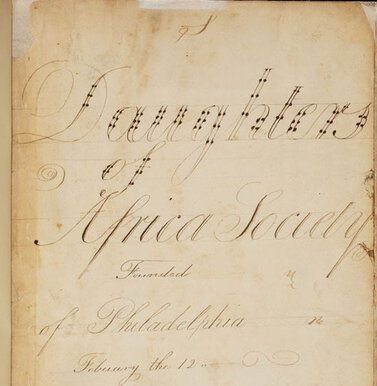
On December 28, 1821, the “order Book†of the Daughters of Africa noted: “Mrs. Hannah Morris please to pay to Mrs. Elissabeth Emery Five Dollars for the President [‘s] Chaire of the Daughter of Africa. Phoeby Lewis President, Elissabeth Matthew, Sucr [Secretary].â€Â On March 1, 1822: “Mrs. Morris Treasure to Pay to Sidney Buck and Elissabeth Griffith for Ann Hacket a sick member … her week allowance $1.50.â€Â On April 25, the society bought paper and ink, duly noted. By May 5, Ann Hacket’s child had died; the society loaned her $4 for the burial “acordian [accord-ing] to 10 article of the Constitution.â€Â And, on November 15, the treasurer paid Sarah Pratte “ten dollars for the lost of hir housband.â€
Their spelling was imprecise their handwriting barely legible, their signatures often X’s; but their intent was clear and their legacy indelible. In 1821, the two hundred working-class Philadel-phia women founded the Daughters of Africa Society. Valuing sisterhood and economic empowerment, they sustained family and community. Theirs was not the first such affiliation. In 1787, the Free African Society had been founded by eight male Philadel-phians, with apprenticeships for children and death benefits. Six years later, the Female Benevolent Society of St. Thomas followed. Among the co-founders of the AME Zion Church in 1796 were women who, within a generation, formed “The Mother Society,†parent to all the AME women’s church groups. But in the detailed records of the Daughters of Africa, a wholly secular union, one gains unique insight into daily life and witnesses the birth of an African American women’s movement.
-Dr. Janus Adams
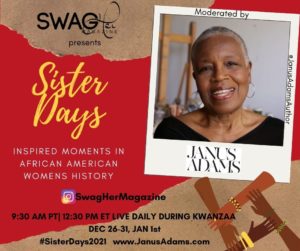 In partnership with SwagHer Magazine, Dr. Janus Adams, Emmy award-winning journalist and historian presents SISTER DAYS Inspiring Moments in African American Women’s History.
During Kwanzaa Adams will share seven days of uplifting meditations on courage, daring, and resistance that bring us valuable reminders of how real women in real times– from the Daughters of Africa to Mary Johnston to the first African American diva to perform at the Metropolitan Opera Marian Anderson – created a better way of life for themselves and a better world for others. In reading their stories, we ensure that these women live on–as shining beacons to light our own quests for happier, more fulfilled lives.