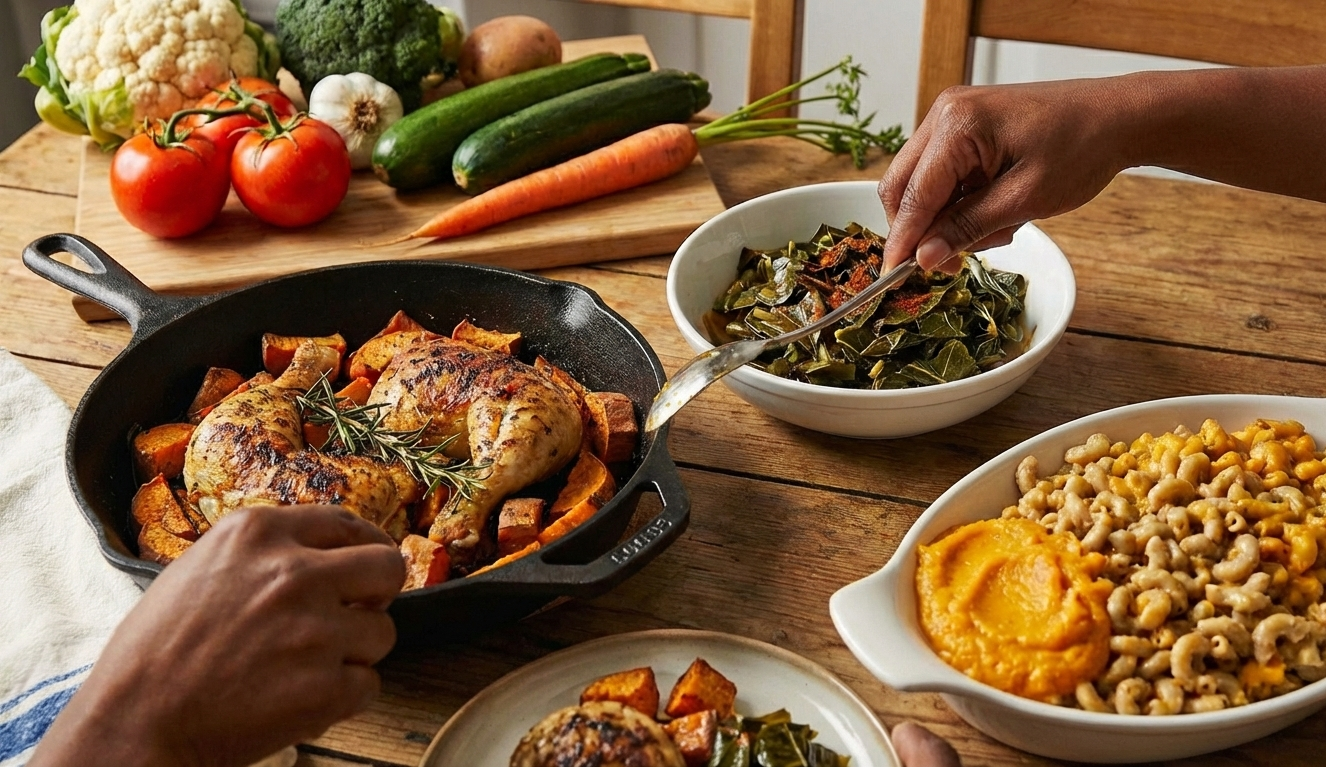
For many of us, soul food is more than just a meal; it’s a memory, a celebration, and a cultural heritage served on a plate. From golden fried chicken to creamy macaroni and cheese, from collard greens simmered with smoked meat to sweet potato pie, these dishes carry stories of resilience and family tradition. But as we become more mindful of health and longevity, a new question arises: how do we honor the richness of our food culture while nourishing our bodies more sustainably?
The answer lies not in abandoning tradition, but in reimagining it.
The Roots of Soul Food
Soul food originated out of creativity and survival. Enslaved Africans and their descendants crafted flavorful, filling meals from limited ingredients, transforming humble cuts of meat and simple grains into cuisine that still thrives today. Every pot of greens or skillet of cornbread is an act of cultural continuity. However, traditional recipes often relied on ingredients high in sodium, sugar, and saturated fats—partly because alternatives were limited and affordable.
Today, with rising rates of hypertension, diabetes, and heart disease in Black communities, healthier adaptations of soul food aren’t about erasing history; they’re about preserving life.
Lighter Twists on Classics
Collard Greens with a Fresh Spin
Instead of seasoning greens with ham hocks or salt pork, try smoked paprika, garlic, and a splash of apple cider vinegar for depth and smokiness without excess sodium. For extra richness, sauté onions and peppers before adding the greens.
Oven-Fried Chicken
Swap deep-frying for oven-baking or air-frying. Coat the chicken with whole-wheat flour or crushed corn flakes, drizzle with olive oil, and bake until crisp. You get the crunch without the grease.
Sweet Potato Magic
Sweet potatoes already pack natural sweetness and nutrients, such as beta-carotene. Instead of marshmallow-laden casseroles, roast them with cinnamon and nutmeg, or mash them with a touch of coconut milk for creaminess.
Red Beans and Brown Rice
Beans are already a powerhouse of protein and fiber. Pair them with brown rice or quinoa instead of white rice for a steadier energy release. Season with herbs, garlic, and peppers to keep the flavor bold and robust.
Mac and Cheese, Reimagined
Use whole-grain pasta and blend in pureed butternut squash or cauliflower with the cheese sauce for added veggies and creaminess. Top with a crisp layer of whole wheat breadcrumbs for texture.

Balancing soul food with whole food principles means incorporating more fresh produce, lean proteins, and whole grains. Cooking methods matter too; grilling, steaming, roasting, and sautéing with heart-healthy oils can transform familiar dishes into lighter versions without sacrificing flavor.
It’s also about portion and balance. There’s nothing wrong with enjoying fried catfish or peach cobbler at a family gathering. The goal isn’t restriction, but creating a rhythm where nourishing options stand alongside comfort classics.
Listen, updating soul food recipes is not a betrayal of heritage; it’s an expansion of it. Our ancestors cooked with what they had, often the least desirable cuts and cheapest staples, and still managed to create something enduring. Today, with more access and knowledge, we can continue that legacy by cooking with what sustains us.
In the end, soul food is about love—love for our history, love for our people, and love for ourselves. Balancing tradition with nutrition means the flavors of the past can remain at our tables, while opening the door to healthier futures.
Read more Vibe & Thrive w/Author Obsession.
New articles every Friday!

Connect at https://linktr.ee/authorobsession