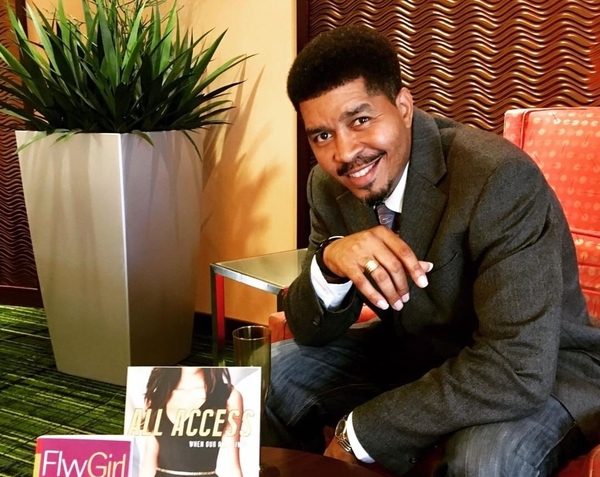
If you didn’t read New York Times Best Seller Omar Tyree’s Flyy Girl growing up, you may not be as culturally inclined as you think. I fondly remember my friends and I sharing this book among our circle and gushing over how badass (before we knew of this term) Tracy was and imagining what Victor may look like. For me personally, Tracy and this book set the tone for my teenage years, as I often found myself searching for Victor in my long-ago exes.
And while we had to share the book as students with no money, adults were buying the book like hotcakes, as Black book clubs were the thing back then, and Omar Tyree was killing it in the Black lit game. The 2006 NAACP Image Awards Recipient for outstanding literary work has more than 20 titles under his belt with fan bases in other countries and on other continents.
Now The Old Head as he affectionately refers to himself is ready to put on another hat and try his hand at directing, and we at SwagHer Magazine are all for it! I was both honored and excited to speak with Mr. Tyree about his current ventures and his coming of age book that was one of the first that I read with the main character who looked like me. Can I just say when I read this book in junior high living in McComb, MS, I never imagined I would one day be privileged enough to speak with the man behind it? This interview is for all the other brown and black girls who read the book and held their breath wondering what would Tracy get into it next… and then how would she get out of it. Dive in and enjoy!
Fancy: So first question, has your vision for Flyy Girl changed any since when you originally wrote the book?
Omar: Naw, I had the same vision 20 years ago of how I would do the movie, and I waited for other people to see how they would interpret it, but that never happened. So I went back to my original interpretation of the 1980’s culture and letting everybody see how fly we were and how the original hip-hop generation was because I call us first generation hip-hop. We are the ones who started it, so I want to take us all back to the start of hip-hop in the 1980’s in the cool city of Philadelphia.
Fancy: Gotcha, so what inspired the screenplay?
Omar: Well again, with the screenplay I had been waiting for people who had the rights to create a screenplay. I planned to offer my opinions on it, give some tidbits, and all of that. I waited for five years, and it didn’t happen. So when it didn’t happen, I said ‘you know what dude, I’m sitting on this thing, let me go ahead and write my own screenplay’. Of course, I had all my own ideas, so when I wrote my own ideas and the screenplay- I mean, it came out excellent! At that point, I’m like, ‘Yo dude, I’m ready to rock and roll with my own screenplay now’. Now I’m trying to create that new momentum to let everybody see how excellent it is, and then push forward with me being in the middle, including the direction. You know a lot of the time, they don’t want you to direct unless you have already directed stuff, but we are talking about a book where these characters have been a part of my existence for 20 something years. Plus I’m original Philadelphia and from that same era, in that same neighborhood, and I know how to talk to people. Furthermore, I’ve been writing characters for twenty-something years, so if anybody would have the experience of telling people how to be these characters, it would be me. Hollywood doesn’t like that, but it’s like ‘hey yo, dude, everybody has the first movie. So this is going to be my first movie, and you all can see that this dude is great at directing’. We can rock and roll from there.
Fancy: I remember a few years ago that it was announced that Sanaa Lathan would play Tracy. So I take it that was part of the waiting process. Is that correct?
Omar: You know I have two sequel books following Flyy Girl, For the Love of Money and then Boss Lady, when Tracy is older, and the way Hollywood works is they don’t want to put a bunch of black people in a movie. They are scared of that; they don’t know if that is going to work anymore, and we don’t have black directors who are writing those types of films now, because they are making more money doing a film with one black man, one black woman, and a predominantly white cast.
Hollywood is terrified of casting new black people, so they feel more comfortable casting people like Sanaa Lathan and older actors and actresses that they know already. They were more interested in producing a film from one of the sequels, not the original Flyy Girl, the teenage book, but what happened was they started sniffing around asking directors and all the directors love the book that you love, the first book, the young book. Once they started doing that, they understood that Sanaa Lathan couldn’t play a teenager, and she damn sure didn’t want to play the mom. So now what are they going to do?
Fancy: Oh, ok. I better understand now.
Omar: Yea, once they started looking at the younger characters, I was like ‘yo, I can’t let you mess up Philadelphia and the young era of the 80’s’. Then once they started talking about contemporizing it, I was like ‘whoa, wait a minute! We didn’t have cellphones; we didn’t have social media. We had our own culture. We had our own language. We had our own music. Wait a minute how are you going to contemporize that? You’re going to lose- in fact, your generation doesn’t even use the word fly anymore!’ I’m like, ‘How are you even going to call it Flyy Girl anymore if you take away all the essence from which it came from?’ So I asked to see what the script looked like, but they never wrote the script. When I wrote the scripts, I was like I’m going back in 1984, 1985, 1986. The movie composes of three years, from her 15 years of age to 17 years of age. So we are going straight to the hardcore years. I don’t mess around. I’m not doing that young people stuff where she is six years old; that’s a waste of time. You can go back to the book for that. I’m going to the core years, 15 to 17 when the real stuff is happening.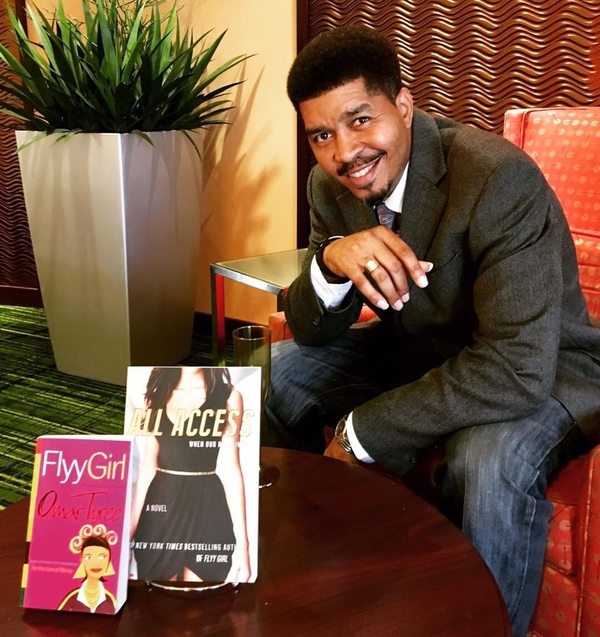
Fancy: So you feel like you bring something new to Hollywood, something different?
Omar: Let me ask you this, what was the last you saw a film that had 20 young black people?
Fancy: Hmm, I honestly don’t know….
Omar: Yea, Straight Out of Compton would be the last film, and that film broke all the records for a music film. Straight Out of Compton would be the last one. It made $200 million dollars worldwide, and you saw all those black people! They don’t really do films like that anymore. You know, now they have one black star and a lot of white people. If you look at a lot of Kevin Hart pictures, outside of the one he did with Ice Cube, he’s like the lone black guy in a lot of these movies.
And that was the same model that Will Smith did years ago. He is the only black guy in the movie. The industry has gone back to that model. Now they have the girl pictures; they got the girl comedies and whatnot with the sister, Tiffany Haddish. They are using her up, but outside of that, we don’t have many cultural films right now. So what am I bringing? I’m bringing black cultural films back, where we have 20 and 30 black people in the movie.
Fancy: Now I have to ask this as well, because when I think of Tracy I think of her relationship with her dad, and I even felt like a lot of her actions in other situations were her rebelling due to her dad and her mom splitting. You don’t think that is important to incorporate?
Omar: No, and as It’s not about rebelling. It’s about being a teenager and doing what you do. How many things teenagers want to do and their parents are like, ‘Oh, you can’t do that.’ They are still going to do what they want to do anyway. It’s just so, so I don’t look at it like rebelling. It’s just being a teenager and trying to figure out what you are going to do in this world.
Tracy happens to be a very confident, very strong, and very dominating presence, and you get that immediately in the screenplay. So if you download the screenplay, you get that immediately with the first scene that she is in. She goes right at it, and you’re like ‘Whoa, this girl is…’ But that is how she is. That is why everyone admires her; that’s why they’ve been loving her for so long because that is how she is. She is a very strong personality.
Fancy: So you think teen girls today will be able to relate to this film?
Omar: I’m going to ask you this, are young women still black? Do they still like boys? Are they still into sexuality? Do they still have mothers? Do they still have fathers? Do they still have girlfriends? Are they still part of America? So there are so many factors that when people ask can others relate, I’m like are you kidding me. I mean they’re girls. Do you mean to tell me you can’t relate to other girls? I don’t care what era it is. If you are still dealing with the same things that girls of other eras have to deal with it, your first love- I don’t care what era you are in, everybody is still going to have a first love! So when I get asked that question, I’m like ‘dude, they are going to see another girl on there, Yara Shahidi, who they know already, playing a girl in the 1980’s, and they are going to look at it and go ‘oh, that’s how it was in the 80’s.’ Because we were cool in the 80’s. We were some of the coolest people in the country, in Philadelphia in the 1980’s.
That’s who we were, so I already know they are going to love it! It’s a no-brainer! But when I do it from the 80’s, guess who else I will attract. Will Smith was in the 80’s; Jada Pinkett was in the 80’s; Jay- Z was in the 80’s; Puffy was in the ’80s; Nas was in the 80’s; Jennifer Lopez was in the ’80s; Ice Cube was in the ’80’s. So all of those older people are recalling the 80’s now, and it’s like ‘Yo, remember the 80’s and its nostalgia?’ Then we are going to attract those people in their 40’s, people in their 30’s, the people in their 20’s, and the teenagers, and it ends up becoming a five-generations kind of movie, because you do it the right way. But if you make it contemporary, then all of us who I just named, who grew up in the 80’s, we’d be like ‘that ain’t the book, that ain’t the era that we grew up in.’ So now we are looking like we can’t relate to that, and I can’t use that!
And for your generation, naw it’s not about you relating to what we were in the 80’s. It’s about relating to the black culture and a period and seeing your peer group in a young teenage movie with that many black people, where you can learn about what came before you, what gave you hip-hop. Because if it wasn’t for us, you wouldn’t have the hip-hop that you have today with our jewelry, our fancy clothes, your earrings, and all of that stuff that we pushed that you all still can do now. Even the videos started in the 80’s. Videos actually started with MTV with white pop videos, but then Michael Jackson pushed his way into the videos with white people, and then black people began creating their own videos with MTV Raps in the late 80’s. So it all came about then. Y’all wouldn’t even have this culture if it wasn’t for my generation. But if y’all not going to watch it, it is like disrespect to my your culture.
But they are going to love it, because I have no problem at all marketing to young people, and we have to cast people that are young people. Yara is what, 20 right now? However, she can pass for 15, because she has that little baby face. Now if we can’t cast her, because she’s too busy, or it’s too urban, or her camp isn’t for it, then we can go looking for another girl who has the look, and we will blow her up, because that is what you have to do. You have to blow that girl up and make her a star, but she has to have the look and she has to have the swagger. I will direct the rest of it.
Fancy: So you have your eyes on Yara Shahidi, but who do you have in mind for Victor? I imagine Victor to look similar to Kofi Siriboe, though I know he’s too old for the role, but who are you picturing?
Omar: Brand new- ASAP Rocky has the look, but he’s too old, and everyone knows him too well. I can’t put him in it, but if I gotta find an ASAP Rocky look-alike that’s like 10 years younger. So I have to find like a 20-year old that can still pass for 18, you know, maybe 17. A gorgeous young black man with dark skin and curly hair, and all of that. You know what I mean? We put that block on him, and we put those Philadelphia clothes on him, and I have to teach him how to speak like a Philadelphian. He’ll be the coolest dude you’ve ever seen in a movie. That’s automatic. My god, he has to look the part immediately! So that means we are going to be casting the finest, dark skin dudes across the country, and I’m going to pick the one with swagger and teach him how to be Victor.
Fancy: So do you expect for this film to be made in the next two years?
Omar: Yea, I want to make it this summer. Hell yea, I’m going after it right now.
Fancy: You’ve mentioned Hollywood and their fear of Black films failing. How do you project the movie would do at the box office?
Omar: I’m projecting $150 million, and I have a whole set up.$150 million and after that it’s gravy. I plan to do $100 million in the United States and then $50 million overseas. People need to understand that I have an overseas following with my books, so it’s ironic that you hear people talking about ‘oh, black films don’t do well overseas’, but when you are talking about a black film that is based on a black book that is overseas…
A lot of times, people try to correlate my predicted movie sales to my book sales, but I’m like ‘let me tell you something. Do you know how many movies I’ve seen where I never read the damn book? Are you kidding me?’ The idea that you are thinking about how many girls read the book is how many will watch the movie is ridiculous. We know guys don’t read as many books, but you know they are going to go to the movies. This is how they try to do us book people; sometimes they try to do a direct correlation on a marketed movie, but this is a whole new market.
Fancy: I take it you are thinking about possibly pursuing other screenplays and movies as well?
Omar: Oh yea, once I get started, it’s a wrap. As a matter of fact, I am working on a Jamaican movie right now that I wrote in 2007 that is called “Nobody Cares About Us” a North Philadelphia Short Film. I’m putting that together, and I have people calling, so I’m like ‘oh, yea, I’m going to be doing three to four movies a year. Once I get it started, it’s rolling.
Fancy: So just out curiosity, how many books could you normally produce within a year?
Omar: When we were writing books in the prime time of black book clubs and whatnot, you only had to write one book per year, and you could eat very well off of that. We were celebrities back in the 90’s, when they had all these book clubs and Oprah had her book club on TV and all of that, but now with reality shows, social media, YouTube, and all this other stuff that becomes distractions, people don’t have the same attention span. You can’t push one book now, so now you are doing a series where people are putting out three and four books per year. I never had to do that. In 25 years, I put out a book every year, and I still have more than 25 books on the market. People say ‘yea, I read all of Omar’s books’, but they’ve really read like three or four. I’m like, ‘yo dude, you need to go my Google page and see how many other books you hadn’t read with my name on it.’ I’ve have been quite busy writing books, so when you start talking about doing movies, I’ve been writing so many characters and so many different story-lines for so many years, you know movies are just the next level of storytelling for me. I am not scared of it at all.
To read the Flyy Girl screenplay click here.
Also, follow and connect with Omar Tyree below:
Instagram: @only1omartyree
Facebook: https://www.facebook.com/omar.tyree.98