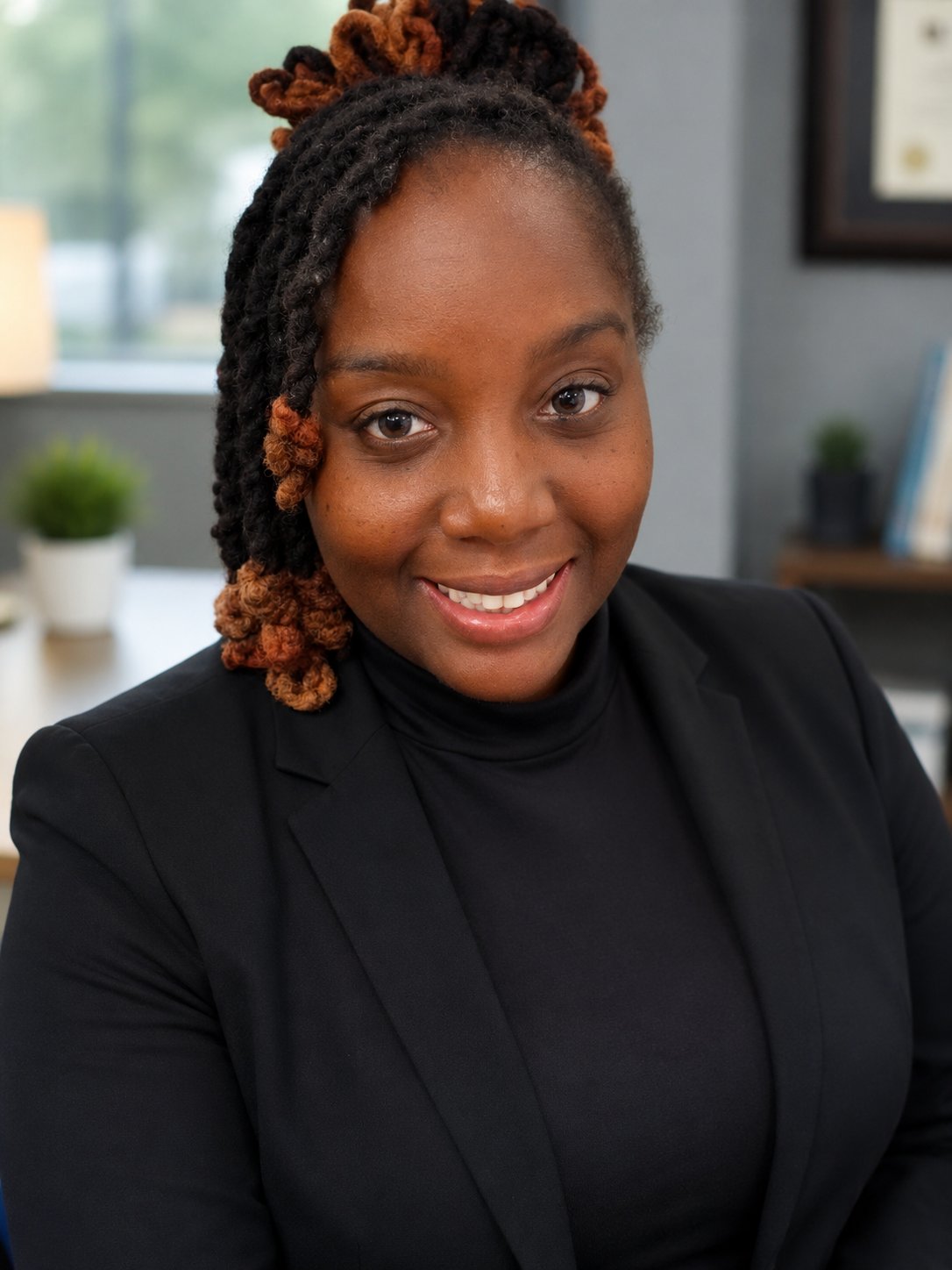
Troya Bishop is regarded as a fierce fighter and advocate for social justice. With over 25 years of experience in advocacy/non-violent protests and a strong background in long-term strategic planning, Troya is considered an expert in social justice causes. Her interest in the movement began after she encountered overt racism and joined the NAACP when she was 9 years old.
Her fourth grade trip to the Alabama State Capitol, in Montgomery, AL. motivated her to become a lifetime advocate for equality. After touring the Capitol with classmates, they entered the office of newly retired Governor George Wallace. The White kids entered first, and he was excited and welcoming. When he realized there were also African American kids in the class, Wallace panicked and yelled, “Get these niggers out of my officeâ€! Armed security guards rushed in and removed the students from the premises.
After that harsh awakening, Troya remained active in the social justice movement, and held various leadership roles, as she continued to acquire more skills to become the best person, and leader possible. Troya served as a Leadership Commissioner and Crisis Committee Chairperson in Rev. Al Sharpton’s Atlanta office of National Action Network (2008-2012). Under the leadership of Rev. Sharpton, Troya was a key liaison in hundreds of cases regarding human rights violations. The most notable was Troy Davis. Although she was key in the mobilization effort to stop Troy’s death and coordinate rallies and protests, she often speaks of the horror she felt after being at the prison with Troy’s family when he was executed.
As a believer in the nonviolent approach to advocacy, she identifies with the philosophies of Dr. King and Mahatma Gandhi. Non-violent activism was a key approach to social change that she learned while earning her B.S. in Communications from Howard University. While completing her M. Ed. at Tennessee State University, her research was comprised of effective strategies for working with children with behavior disorders. She is completing her Doctor of Education in Higher Education & Adult Learning and presented her academic research on transformational learning at the International Research Conference in Calgary, Alberta, Canada. Her commitment to teaching adults to become advocates, lead her to start her own non-profit organization, Parental Empowerment Institute (PEI), in 2012 and she now serves as the Executive Director.
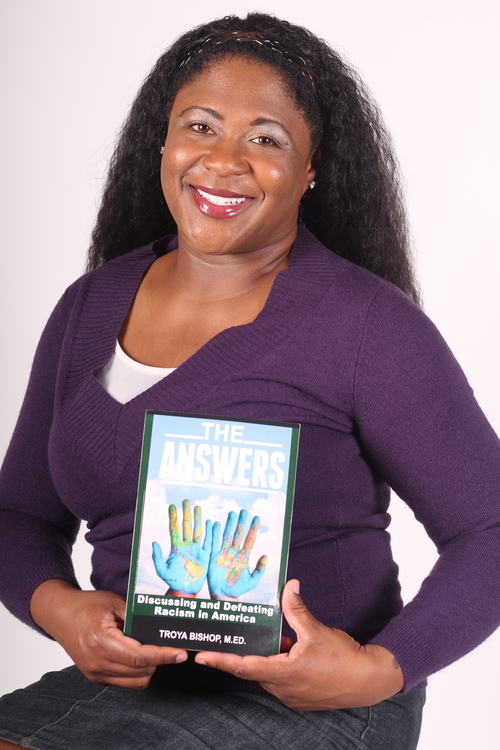
During President Obama’s leadership, Troya was invited with PEI to visit the White House and participate in the, My Brother’s Keeper Initiative, for young men of color. Troya’s passion for advocacy and her ability to mobilize people earned her a permanent place in the movement, and a soft spot in the hearts of those she has served. In 2016, she put her thoughts and research into books: a two-set book/workbook curriculum titled, The Answers: A Parent’s Guide to Discussing Racism with Children. The second book and workbook are titled: The Answers: Discussing and Defeating Racism in America. Troya also released a book in 2018, “The Answers to Intimacy: Why Men NEED Oral Sex and Women NEED to talkâ€. A culmination of all her research, Troya ensures supporters that the book will demonstrate the connection between a person’s perception of power and their interpersonal relationships. This book has received raving reviews, and couples from all walks of life are expressing their appreciation for it.
Fancy: How would you describe your swagher? What makes Troya, Troya?
Troya: My swagher is rooted in kindness and love. I try to be as intentional as possible with how I treat people and how I allow people to be treated in my presence. I’m more than a boss, more like a queen.
Fancy: I was so moved by your recount of meeting former Governor George Wallace. Did he ever issue an apology to you all?
Troya: Apology?!? LOL! Technically yes. He gave a general statement of apology to, “those he hurtâ€, back in 1995. The Baltimore Sun published a story about it. I was a sophomore at Howard University at the time. But to me or my classmates, no…he never directly apologized. I believe he died just like he lived…a miserable racist.
Fancy: How does an incident like that affect a young girl? Did it make you question your worth?
Troya: It didn’t make me question my worth. Fortunately, I had parents who told me often that I was smart and beautiful. But it did open my eyes to cruelty and injustice. So I don’t have regrets and I’m not angry or bitter about it. I’m thankful that it helped me to see that there was a social justice movement happening, and it made me commit to being a part of it.
Fancy: To be honest, I was a different person during the Troy Davis case, but your mention of it piqued my interest. From what I read, the events seem very unclear, but I wanted to know what human rights of Troy’s were violated?
Troya: Basically, Troy’s human right to life was violated. The state of Georgia violated his civil and human rights when they killed him. There was NO DNA evidence that he committed the murder, ALL WITNESSES recanted their stories, and human rights advocates from around the world mobilized to petition the courts of Georgia. Our point was, even if he committed the murder, there was too much doubt to execute him.
Fancy: So tell us about your nonprofit, Parental Empowerment Institute (PEI).
Troya: PEI was developed from being a middle school teacher for 10 years and working in social justice. I had an understanding that there are so many things parents are held accountable to do and held accountable for. Most people don’t have the skill set. I certainly would not have had it, if I hadn’t been a teacher. So, PEI supports parents by filling those voids.
Fancy: What type of organizations might be interested in partnering with PEI?
Troya: Any organization that serves children can partner with us to support the parents with strategies and resources for raising emotionally healthy kids. Everything we do and teach is rooted in the components of Emotional Intelligence, so no matter the socio-economic background or educational background, everyone can benefit from our services.
Fancy: Please share more about your books “The Answers: A Parent’s Guide to Discussing Racism with Children†and “The Answers: Discussing and Defeating Racism in Americaâ€.
Troya: As I was working in PEI, parents kept asking me to recommend a book that they could read to know what to say to their children about racism. As I looked over time, I couldn’t find any. So I wrote my own, and people loved it! These books give information about racism from a factual, research-based perspective. So I’m not sharing what I think or how I feel. I’m actually sharing real peer-reviewed research from my perspective as an African American woman. They both have companion action-guides, so you really can read them and uncover your own personal biases, based on your experiences and your exposure.
 Fancy: Was racism discussed within your family growing up?
Troya: Yes, we discussed racism, because we all experienced it often. I’m grateful that I had parents with the resolve to make sure I was equipped to go into this world knowing myself and knowing about the battle I was in, as a Black woman.
Fancy: Does discussing racism with our children soften the blow any for when they may experience it?
Troya: Yes, because I look at it from a strategic view, since it is a war we are in. In order to win any battle, you have to be prepared and know the opponent coming against you. Preparing our children by equipping them with the truth is the best tool to end racism and weapon of any war. You have to at least know what is going on. As a veteran educator and life-long learner, I really believe that preparation is where many well-intentioned people lose the battle. The lack of knowledge and the lack of application of knowledge. Is where we have the largest opportunity to grow.
Fancy: Do you have any tips for those who may be wanting to organize for a cause within their community and unsure where to start?
Troya: Yes! Definitely knowing who is currently doing social justice work in your area is a great place to begin. Meet with leaders from various organizations and find out what they have tried, what worked, what didn’t work, and how they suggest you move forward. Starting with people who are already there and doing the work, shows humility and respect for history. That is a much-needed characteristic for a person engaged in social justice work. From there, you can begin to organize your ideas, your team, and your work.
Fancy: You know I’ve never heard that suggestion but I love it because too often we’re excited and unknowingly step on someone’s toes. Now I know you also have a third book, “The Answers to Intimacy: Why Men NEED Oral Sex and Women NEED to Talk?”. It sounds like you went in a totally different direction with that one. What inspired this one?
Troya: I know it sounds like I went in a different direction, but I didn’t. This book came from the workshops, tours, podcasts, radio and tv interviews that I did for the first books. I got a notion from listening to people in the audiences, that racism was one of the main reasons that people who are in relationships with Black people have difficulties. African American men and women are oppressed and facing obstacles caused by racism all day, especially at work, and are expected to come home and be the loveliest version of themselves. That’s unrealistic, and many relationships are failing because of that disconnect. So, I decided to do some research, and that notion was backed by TONS of research that I had never heard of! This is the book I wish I had before I got married, and certainly wish I had before I got a divorce. This book drastically changed the way I look at relationships and what I need in a relationship. I have learned a lot, and other people I have come across that have read the book are learning and growing too. It has been a HUGE blessing!
Fancy: How do you practice self-care?
Troya: I actually write days on my calendar for just rest. I also make my home my safe-haven and try to only relax and do fun things at home…no work. You have to leave work AT WORK! That’s my favorite self-care tool. I also indulge: frequent vacations, outings with friends, amusement parks with my daughter, long hot bubble baths, wine, chocolate, and I am a candle junkie! LOL! I love scented candles.
Fancy: Do you seek balance or harmony?
Troya: Both. Each morning I recite affirmations for my personal life, my relationships, my finances, and my businesses. I believe that affirmations help me get there. Although sometimes my experiences and my thought-life don’t add up to what I want, my daily affirmations help keep me centered and balanced. I will admit that life can be tricky, so I sometimes get away from what I know I need to do to stay balanced. But I always come back to my center. I’m always looking for new ways to find balance. What do you recommend?
Fancy: I love affirmations too. I also work hard practicing being present, which means I will often place my phone elsewhere when I am trying to complete something or spending time with my family. Also, I’m not sure if this the best way to describe it, but I practice empathy a lot, like really trying to put myself in the shoes of others so I can see things from their perspective, which of course keeps down the chaos. So do you have any upcoming events or projects that you care to share?
Troya: There are several upcoming events in different cities, where we will discuss intimacy, racism and of course the books and strategies for improving relationships from the action guides. For the most current information, visit the website details: theanswerstoracism.com
Connect with Troya and PEI below:
Facebook: https://www.facebook.com/TheAnswersAParentsGuide/
Instagram: @olebaddtroya
Twitter: @AnswerstoRacism